




- Advanced materials
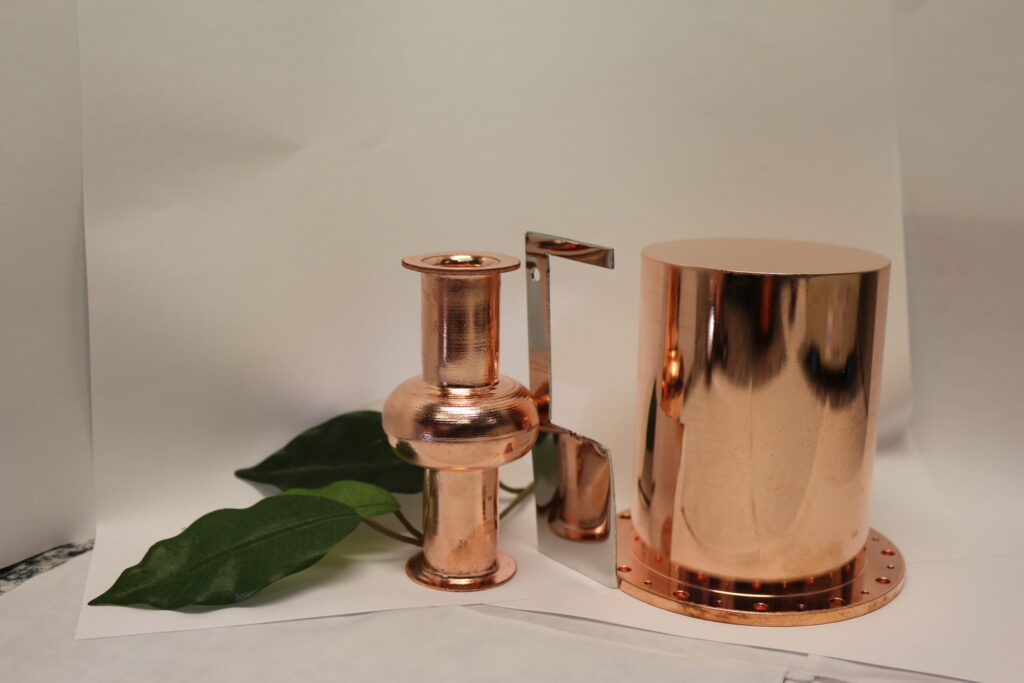
Chemical solution containing phosphorus suitable for polishing copper and copper alloys by plasma electropolishing
Benefits
Why choose this technology
The strengths of this technology.
A more ecological and safe chemical composition
Free of toxic and highly dangerous and complex concentrated acids to dispose of. Traditional polishing treatments always involve concentrated solutions of phosphoric acid. The invention in question, on the other hand, consists of various aquose solutions with a low concentration.
Process speed about 10 times higher than traditional methods (erosion speed up to 25 um/min, on average 10-15 um/min).
Smoothing effect more effective. The smoothing effect already occurs at minimum material thicknesses. With the same material removed, a lowering of Ra roughness is obtained about 2 times higher than the classic chemical and electrochemical Cu polishing treatments.
Technology
How it works
Aqueous solution based on phosphorus specifia for electropolishing copper and its alloys with palsama, which allows to obtain better results than traditional chemical or electrochemical polishing techniques.
The invention allows a homogeneous polishing of copper and its alloys via electrolitic polishing plasma with results comparable or better than those of traditional electropolishing. Polishing means the increase of the reflective coefficient, the glossy effect of the surface, the decrease of the values of micro and macro-roughness; in particular this technology allows to reach roughness values Ra<50 nm.
Plasma electropolishing is an electrochemical polishing technique which, unlike standard electropolishing, works in a different regime, at higher currents and potentials, using more diluted solutions than standard chemical or electrochemical techniques.

Are you interested in this technology?
Ask us for availability, license terms or more detailed technical material. The TT Service answers you.
Applications
Where this technology is applied
The areas in which this technology offers the greatest advantage.
Aesthetic use or as substrate for the jewelry industry
Copper is a substrate or intermediate layer in various scientific and industrial applications and is frequently used due to its perfect thermal and conductive properties. For example, heat exchangers or boilers are often made of copper.
Chemical industry, as a preliminary treatment phase can use copper in electroforming and electroplating. After machining, chemical or electrochemical deburring can be applied to bulk Cu materials. As an advantage of this electropolishing, the corrosion resistance is often durable, ensuring a longer aesthetic vision and mechanical and physical properties of the copper material.
Cu alloys, such as brass, are used in taps and fittings
Explore
Other Technologies in Advanced Materials
- Advanced materials
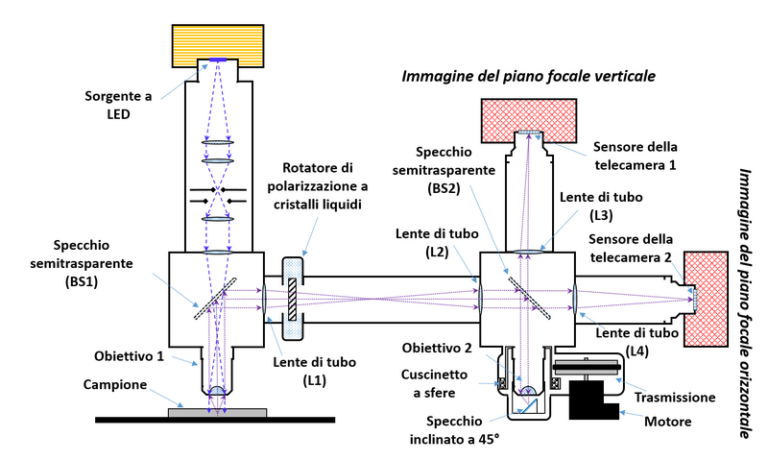
OPTICAL MICROSCOPE OF SUPER 3D RESOLUTION
Fully automatic optical microscope for fast reading of samples consisting of a transparent dielectric with metal nano-particles immersed in it. The...
- Advanced materials
Method for the production of a periodically bent crystal and its application in a device for the production of electromagnetic radiation
The invention refers to a method of obtaining a periodically bent crystal, i.e. a crystal in which the crystalline planes exhibit deformations...
- Advanced materials
Process for the production of polymethyl methacrylate comprising high concentration gadolinium oxide nanoparticles
A procedure to obtain plexiglass plates of high thickness, loaded with gadolinium oxide in nano-grains in high concentration. The procedure...

Contact us
Can this technology help your business?
Tell us about your project: the TT Service puts you in touch with the researchers who have developed the technology and evaluates with you the most suitable form of collaboration.
Contact the TT Service