




Technologies
First in vivo trials for a new intraoperative probe
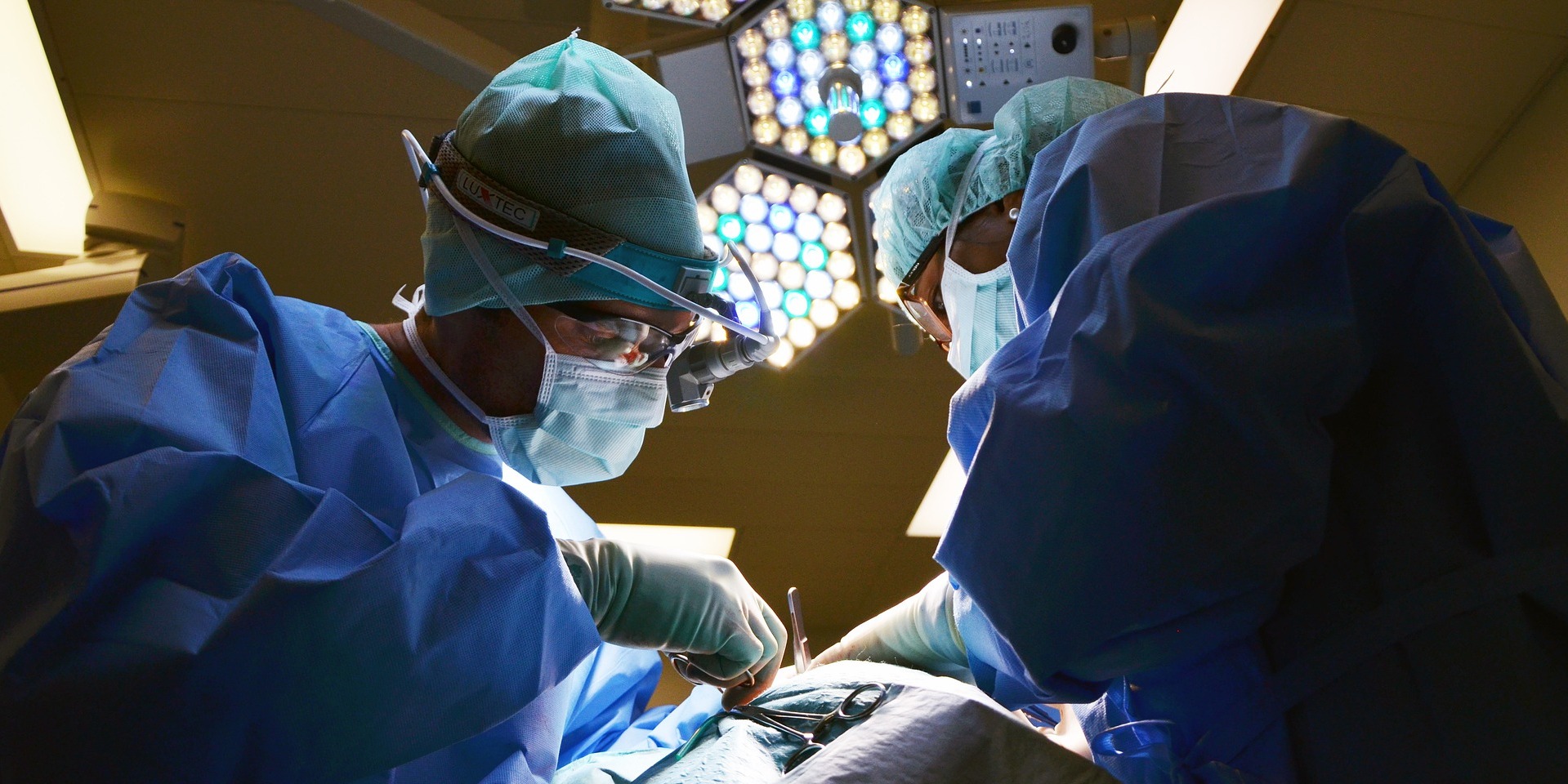
In vivo trials of an intraoperative probe for precision oncology surgery, developed by Sapienza, INFN and Centro Fermi, have begun
One of the main goals of cancer surgery is the competitive removal of the tumor, preserving healthy tissues. It might seem obvious, but in practice it is not so simple: if in fact there are now very precise medical imaging techniques that can clearly identify the cancer in the pre-operative phase, during the surgery it is not easy for the surgeon to recognize precisely which are the edges of the tumor to be removed, and there is a risk of not removing all the cancer cells.
Hence the need for ‘precision surgery’ aimed at the complete removal of cancer residues. The approach is to mark the tumor with a radiopharmaceutical that attaches to the diseased cells and then identify it with a portable probe that can be used by the surgical team during surgery.
The initial idea, developed by La Sapienza University, INFN and Centro Fermi Museo della Scienza and patented in 2013, was to directly detect the beta-radiation (i.e. electrons) emitted by the radiopharmaceutical. It is precisely the characteristic of beta-radiation that it rapidly loses energy within the tissues and therefore is not very penetrating that makes it possible to achieve spatial resolution of the probe and, consequently, precise identification of tumour residues. In addition, direct detection of beta radiation instead of photons emitted by tissue interaction makes the signal less sensitive to background noise, and therefore more specific.
Despite the theoretical goodness of the approach, its practical application has been severely constrained by the low availability of beta-emitting radiopharmaceuticals. For this reason, after studies carried out in collaboration with the Carlo Besta Neurological Institute, the European Institute of Oncology, the Leiden University Medical Center and the Agostino Gemelli University Polyclinic Foundation, the choice therefore fell on beta+ radiation, characterised by the emission of a positron, the electron antiparticle, and two photons, used daily in nuclear medicine departments for PET (Positron Emission Tomography) diagnostic tests.
Demonstrating the technical feasibility of an idea is, however, only the first step to its real practical use, for which synergies and resources are needed that go beyond the simple commitment of researchers; the patent filed jointly by Sapienza, INFN and Centro Fermi was then licensed to a company, NUCLEOMED S.r.l., which carried out the first prototypes of the device that are now used for the first trials on patients at the European Institute of Oncology in Milan, where the potential of the technique is studied in detail both on Neuro-Endocrine tumors of the gastro-intestinal tract (GEP-NET) and on prostate cancers, and the ‘Molinette della Città della Salute di Torino’ Hospital, in the case of prostate cancers.
News
Read also
More news from INFN Technology Transfer.
INFN technology allows the first production of copper-67 in Italy
The collaboration between the National Laboratories of Legnaro of INFN, the University of Ferrara and the IRCCS Sacro Cuore Don Calabria of Negrar (VR) has reached an important milestone for Italian nuclear medicine, opening new perspectives for the national production of teranostic radionuclides: the first production, in our country, of copper-67 (67Cu), one of the most promising radionuclides for the diagnosis and treatment of various oncological diseases.
Particle accelerators at the service of society
If you think of a particle accelerator, great equipment comes to mind in laboratories dedicated to scientific research. The role of these machines in the study of basic science is certainly very important, however, they are also used for purposes closer to everyday life. Among the different applications of accelerators, the most significant are probably those related to medicine and cancer treatment.
New frontiers in X-ray computed tomography for patient diagnosis and treatment
Antonio Sarno, researcher of the INFN section in Milan, works to make X-ray tomography with a conical beam more and more accurate.
Contact us
Want to collaborate with INFN?
Tell us about your need: the TT Service puts you in touch with the right people and skills for your project.
Contact us