




Insights · Technologies
Particle accelerators at the service of society
If you think of a particle accelerator, great equipment comes to mind in laboratories dedicated to scientific research. The role of these machines in the study of basic science is certainly very important, however, they are also used for purposes closer to everyday life. Among the different applications of accelerators, the most significant are probably those related to medicine and cancer treatment.
Medical applications
If you think of a particle accelerator, great equipment comes to mind in laboratories dedicated to scientific research. The role of these machines in the study of basic science is certainly very important, however, they are also used for purposes closer to everyday life. Among the different applications of accelerators, the most significant are probably those related to the medicine and cancer treatment.
Ion beams against cancer
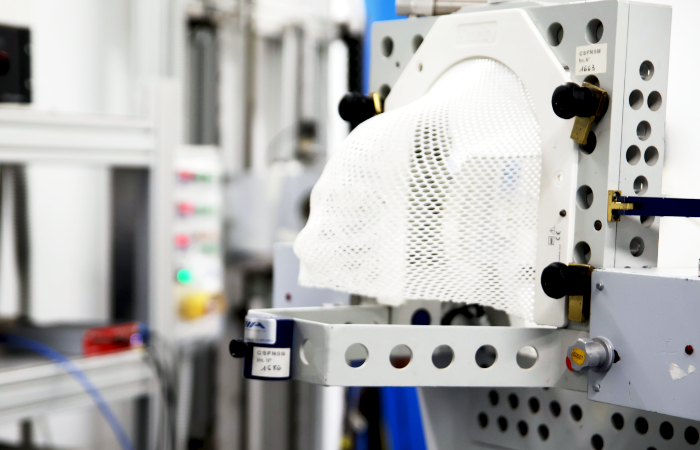
Accelerated ion beams are used to treat tumors that cannot be treated with traditional techniques. INFN has been a pioneer in this field through the Center for Adrotherapy and Advanced Nuclear Applications (CATANA) active since 2002 at the National Laboratories of the South and dedicated to the treatment with proton beams of ocular melanomas. Accelerated ion therapy (adrotherapy), unlike conventional X-ray radiation therapy, acts much more locally, preserving the healthy tissues surrounding the tumor. This is crucial when acting on sensitive areas, such as the eye, where radiation therapy cannot be used because it would also cause serious damage to brain tissues.
The CATANA proton beam is supplied by the superconductive cyclotron of the National Laboratories of the South and has an energy of 60 MeV, ideal for treating ocular melanomas. This therapy is the only alternative to surgery and, unlike surgery, allows vision to be preserved.
A facility dedicated to the treatment of patients
INFN’s experience in using ion beams for cancer treatment resulted in National Center of Oncological Hadrontherapy (CNAO) Pavia, the only centre in Italy and one of six in the world capable of delivering proton and carbon ion hadron therapy treatments. INFN designed and manufactured the 80-metre-circumference synchrotron capable of accelerating protons up to 250 MeV and carbon ions up to 4800 MeV. The use of two different types of particles and the energies involved make it possible to treat different types of cancer.
INFN and CNAO have signed an important agreement to carry out joint research aimed both at introducing treatments with additional ions and at developing innovative imaging and dosimetry systems.
FLASH Therapy and Beyond
However, the use of accelerators in medicine does not stop at hadrotherapy. As part of the project ANTHEM, has been installed and tested at the Center for Advanced Preclinical in Vivo Research (CAPiR) University of Catania, an accelerator for Electron FLASH Therapy.
FLASH Therapy uses electron beams that concentrate in fractions of a second dose of radiation up to a thousand times higher than traditional radiation therapy. In this way it is possible to effectively treat a tumour while preserving the surrounding tissues from radiation damage. This procedure is still under study, and the installation of this accelerator, the result of a collaboration between the University of Catania, the Cannizzaro Hospital, the CNR-IBSBC and the INFN Southern National Laboratories, is essential for the development and validation of new therapeutic protocols.
The research on the subject also involves the National Laboratories of the South where it will soon be available I-Light, an electron acceleration system based on high-power lasers that will allow to work in ultra-FLASH mode, i.e. using electron beams of even higher intensity thus paving the way for new tools for the fight against cancer.
Boron Neutron Capture Therapy
But the ANTHEM project is not limited to FLASH Therapy. In fact, spoke 4, in which INFN is involved, has as one of its objectives the construction, at the Luigi Vanvitelli University of Campania, of a centre for clinical research on Boron Neutron Capture Therapy (BNCT), based on an INFN technology for the production of high neutron flux beams.
BNCT occurs in two stages: in the first, the patient takes a drug that binds to the tumor by concentrating large amounts of boron in it; In the second, the tumor is irradiated with a beam of low-energy neutrons.
Neutrons have a high probability of being captured by a boron isotope, boron-10, which turns into boron-11 and then decays into a helium and a lithium nucleus. The energy produced by this reaction is absorbed in a very small volume, comparable to cell size, so it is possible in this way to use it to destroy the tumor, in which the drug has concentrated boron, leaving the surrounding healthy tissues intact. This type of therapy is extremely selective and therefore allows to treat tumors resistant to therapies or close to tissues very sensitive to radiation, and also metastases.
In the past, the only sufficiently intense neutron sources available for BNCT were modified nuclear reactors for irradiation of patients, whereas today neutron sources generated with particle accelerators are available. The centre under construction in Campania involves the Pavia Section, the Legnaro National Laboratories, the Southern National Laboratories, the Naples Section and the INFN Turin Section.
Not just treatments
The use of accelerators in medicine is not limited to the direct treatment of patients, but is also crucial for the production of radiopharmaceuticals.
The first step in the creation of a radiopharmaceutical is the production of the radioisotope, i.e. the element that emits radiation, and it is precisely in this step that the INFN contributes, thanks to the project SPES (Selective Production of Exotic Species), which aims to create a unique structure at the National Laboratories of Legnaro for both basic research in nuclear science and research on radioisotopes for medical purposes.”
The SPES cyclotron accelerates protons up to 70 MeV at very high intensities, reaching 700 μA, and provides the beam for two lines of research on medical radionuclides active at the Legnaro Laboratories, direct activation and the ISOL technique.
The method of direct activation consists of irradiating with proton beams a dedicated target, the implementation of which is specifically optimised to produce the medical radionuclide of interest, which after bombardment must undergo a radiochemical process to extract and purify the medically relevant radioisotope from all irradiated material.
In the technique ISOL, on the other hand, the proton beam affects a thick target of uranium carbide (UCx), generating a set of fission fragments, most of which are then released from the target thanks to high working temperatures, generally above 2000 °C. The released nuclei are transformed into positive ions and are extracted into a particle beam. A mass separator allows the desired isotope to be selected and collected.
Two examples are only the copper-67 and the scandium-47, whose production methods from targets irradiated with a cyclotron are covered by as many INFN patents.
Basic research at the service of society
The applications of particle accelerators in life sciences represent the often unexpected fruits of basic research. Investing in fundamental science is necessary to create the substrate of knowledge that leads to the creation of technologies that then generate positive impact on society. INFN conducts frontier physical research and, through its technology transfer facilities, actively works to ensure that research results have a positive impact on people, society and the economy.
to find out more
contact the Technology Transfer Service
News
Read also
More news from INFN Technology Transfer.
L as Lead
To reach the market, a technology born in the laboratory needs to be accompanied along a path that goes from identifying its application potential to valorisation, through constant monitoring and support. This is the role that the INFN Technology Transfer Service, together with the National Committee for Technology Transfer (CNTT) and the network of local representatives plays every day, that is to act as a lead, a guide, between basic physics and the productive world. Lead is a structured process that connects laboratories, researchers, companies, investors and institutions to transform skills and knowledge into concrete innovation capable of generating value for society.
From Laboratory to Patient: The Role of INFN Technology Transfer in Life Sciences
From laboratory to patient: the role of INFN Technology Transfer in medical physics The point of view of Mariangela Cestelli Guidi, coordinator of INFN's National Committee for Technology Transfer
K as Know-How
When you think about how to protect industrial property that comes from a new technology, the first tool that comes to mind is the filing of a patent application. However, sometimes there are results that for legal, technical or expediency reasons may not be patented but, not for this reason, otherwise protected. In these cases you can resort to the trade secret, also commonly called know-how. Unlike patents, where the details of the invention are made public, know-how has value as long as the information is kept secret.
Contact us
Want to collaborate with INFN?
Tell us about your need: the TT Service puts you in touch with the right people and skills for your project.
Contact us