




Technologies · Collaborations
INFN technology allows the first production of copper-67 in Italy
The collaboration between the National Laboratories of Legnaro of INFN, the University of Ferrara and the IRCCS Sacro Cuore Don Calabria of Negrar (VR) has reached an important milestone for Italian nuclear medicine, opening new perspectives for the national production of teranostic radionuclides: the first production, in our country, of copper-67 (67Cu), one of the most promising radionuclides for the diagnosis and treatment of various oncological diseases.
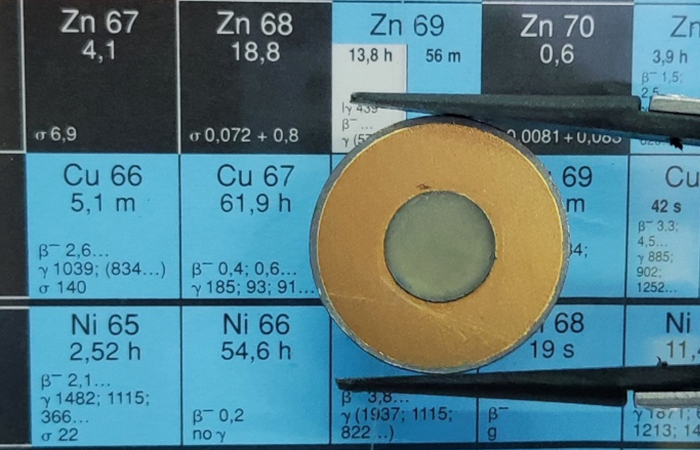
The isotope is among the most promising in the fight against cancer
An important milestone
The collaboration between the INFN Legnaro National Laboratories, the University of Ferrara and IRCCS Sacro Cuore Don Calabria of Negrar (VR) has reached an important milestone for Italian nuclear medicine, opening new perspectives for the national production of teranostic radionuclides: the first production, in our country, of copper-67 (67Cu), one of the most promising radionuclides for the diagnosis and treatment of various cancer diseases.
The result originates within the CUPRUM-TTD project, financed by National Scientific Commission 5 (CSN5) INFN and developed at the National Laboratories of Legnaro. The objective of the project is to develop innovative technologies to produce 67Cu through the way of direct activation, through the use of particle accelerators.
Radionuclide production is based on high purity, solid targets irradiated with a beam of protons. Following irradiation, the material undergoes a nuclear reaction leading to the formation of the radioactive isotope of interest. In this case, the starting material is highly enriched zinc (over 98%) in its isotope with atomic mass 70 (70Zn), which in turn is converted, through a chemical process, into zinc oxide (70ZnO).
The SPES project
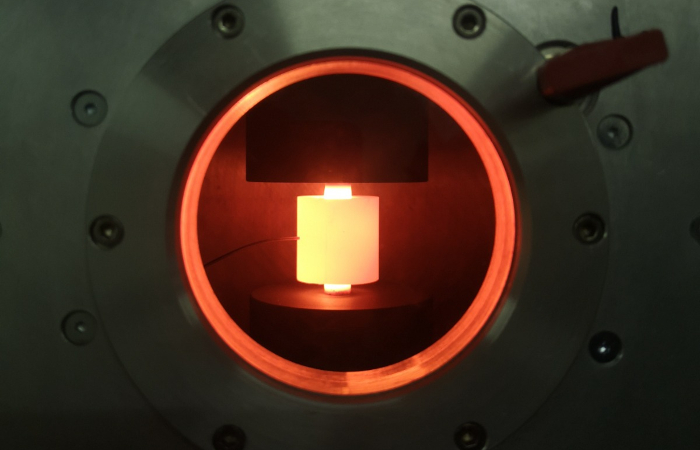
A fundamental contribution came from the group of SPES project at the National Laboratories of Legnaro, which deals with the development of innovative radioisotopes for medicine. After years of research and development, he designed and built the targets of 70ZnO, using proprietary process-based technology known as Spark Plasma Sintering (SPS). The SPS system was developed in-house, in collaboration with the team that worked on theTT-SINTER experiment of the INFN Section of Pavia.
The targets were then transferred to the Radiopharmacy Unit of the IRCCS Sacro Cuore Don Calabria, where they were irradiated with a beam of 18 MeV protons produced by the institute’s cyclotron. At the end of the irradiation, the 67Cu obtained has been chemically separated and purified, through specific radiochemical procedures developed at the University of Ferrara.
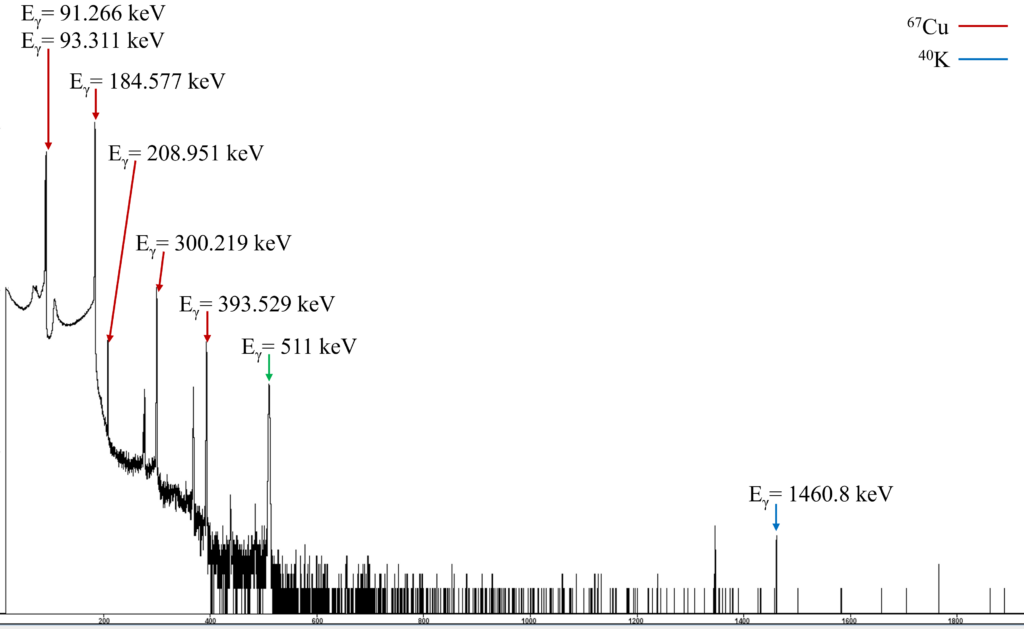
Why produce copper-67
The 67Cu is one of the theranostic radionuclides of major international interest, thanks to its peculiar physical and radiobiological characteristics. Has a half-life (T1/2) of 61.8 hours and its main characteristic is to decay by emitting both β particles– both γ rays of adequate energy. These unique characteristics make it suitable for both therapy and medical imaging. The emission of β particles–, in fact, has an energy that allows it to be used in the treatment of various oncological diseases, while the concomitant emission of γ photons allows the acquisition of SPECT (Single Photon Emission Computed Tomography) images, a three-dimensional diagnostic imaging system that makes it possible to assess the biodistribution of the drug, monitor therapy and perform dosimetry. Its use is particularly promising in personalised nuclear medicine, in particular for the treatment of cancers such as prostate cancer and glioblastoma.
INFN’s technological role
For years, INFN has been involved in research in physics applied to life sciences, with projects ranging from the development of accelerators for medical applications, to dosimetry, to the production of radionuclides for the diagnosis and treatment of cancer. In this context, the National Laboratories of Legnaro are completing the construction of theSPES plant for the production of radioisotopes, based on a cyclotron capable of accelerating proton beams up to a maximum energy of 70 MeV, and which will also be dedicated to the production of radioisotopes of medical interest.
The installation SPES It will enable the production of radioisotopes through two complementary technologies: online isotopic separation e direct activation on targets solids, significantly expanding the possibilities for research and production of innovative radionuclides. A distinctive feature of these activities is the expertise developed internally by INFN in the field of Spark Plasma Sintering (SPS) (opens in a new window), a technology that enables the production of advanced multi-material targets that can be used for the production of radionuclides based on the direct activation process. To this is added the portfolio of proprietary patents (opens in a new window) It covers the production process of several radioisotopes, including copper-67.
Once operational, the SPES facility will allow the production of radionuclides directly at the National Laboratories of Legnaro and, thanks to the high energy available, to develop more efficient and selective production processes. In the case of 67Cu, this will make it possible to increase yield and improve radionuclide purity.
These ongoing activities represent an important strategic investment for the future of nuclear medicine in Italy and lay the foundations for making innovative radionuclides available for preclinical studies and future clinical applications. At the same time, they confirm the role of the INFN in National Laboratories of Legnaro (opens in a new window) as protagonists in the development of advanced technologies and infrastructures at the service of biomedical research and health.
To find out more
For more information on the production of iradionuclides with the direct activation method, you can consult the website of the RAdionuclide labratory for medicine (LARAMED) (opens in a new window)
Here (opens in a new window) you can find an in-depth article on the applications in the life sciences of accelerators
The page INFN for Life science (opens in a new window) describes INFN programmes for life sciences
To find out how to collaborate with INFN in the field of radionuclides for medicine, write us
News
Read also
More news from INFN Technology Transfer.
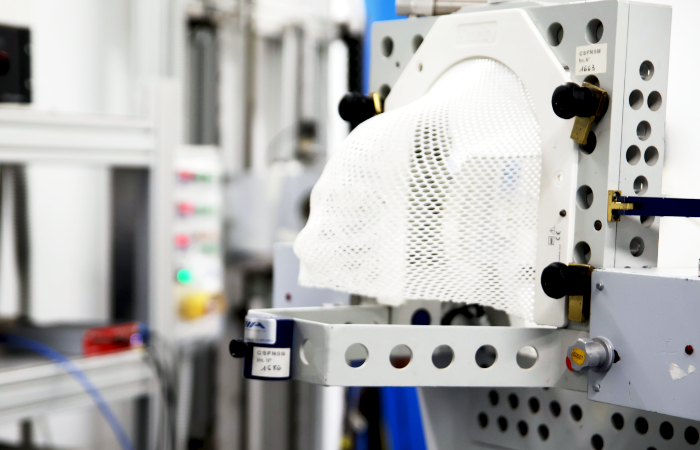
Particle accelerators at the service of society
If you think of a particle accelerator, great equipment comes to mind in laboratories dedicated to scientific research. The role of these machines in the study of basic science is certainly very important, however, they are also used for purposes closer to everyday life. Among the different applications of accelerators, the most significant are probably those related to medicine and cancer treatment.
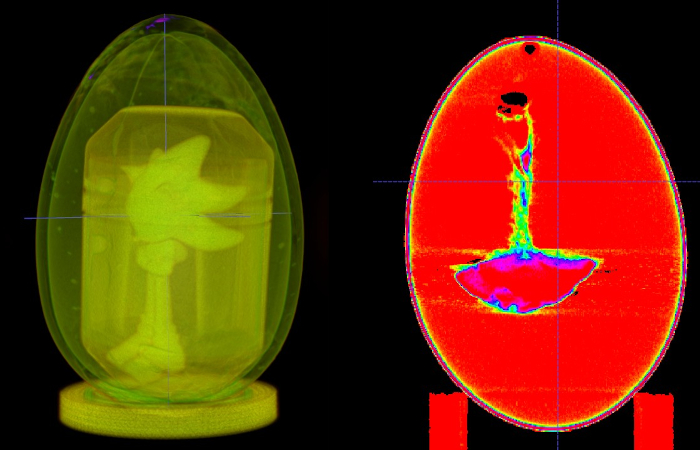
New frontiers in X-ray computed tomography for patient diagnosis and treatment
Antonio Sarno, researcher of the INFN section in Milan, works to make X-ray tomography with a conical beam more and more accurate.
From material technology to advanced cancer therapies, the commitment of the INFN section in Pavia for research applications
The point of view of Silva Bortolussi, INFN researcher and associate professor at the University of Pavia
Contact us
Want to collaborate with INFN?
Tell us about your need: the TT Service puts you in touch with the right people and skills for your project.
Contact us