




- Sensors and Advanced Electronics
APPARATUS AND METHOD FOR THE NON-INVASIVE INSPECTION OF SOLID BODIES BY MUONIC IMAGING

Benefits
Why choose this technology
The strengths of this technology.
High resolution images (4.5 m typical).
High contrast for both high and low target densities compared to the average density of the massive structure.
Resolution of targets within massive structures of diameters of the order of the Km of rock.
Elimination of the problem of back-flux, present in the muography obtained with traditional methods.
Technology
How it works
Muons, generated by the interaction of cosmic rays with Earth's atmosphere, can penetrate dense materials. By measuring the absorption of muons, information is obtained on the distribution of density within massive structures, revealing voids or anomalies. Muon tomography, which combines observations from different angles, produces 3D images with high spatial resolution. The use of Cherenkov detectors improves the signal-to-noise ratio. This method finds applications in civil engineering, archaeology, volcanology and other areas where non-invasive inspection of large structures is needed.
The invention concerns a non-invasive inspection method called muon imaging, similar to medical radiography, which uses muons instead of X-rays. Muons are particles generated by the interaction of cosmic rays with the Earth's atmosphere and can penetrate dense materials. By measuring the absorption of muons, it is possible to obtain information on the distribution of density within massive structures, such as revealing voids or anomalies.
Muon tomography, which combines observations from different angles, allows high spatial resolution 3D images to be obtained. The use of Cherenkov detectors for muon x-rays represents a significant advance, improving the signal-to-noise ratio. This method has multiple applications in civil engineering, archaeology, volcanology and other areas where non-invasive inspection of large structures is needed.

Are you interested in this technology?
Ask us for availability, license terms or more detailed technical material. The TT Service answers you.
Applications
Where this technology is applied
The areas in which this technology offers the greatest advantage.
Non-invasive geological surveys (e.g. Volcanoes, pockets of water within hills or embankments, even of considerable size).
Non-invasive monitoring of civilian structures (e.g. Nuclear Power Plants, Radioactive Materials Containment and Storage Systems, Heavy Mineral Fields).
Non-invasive archaeological research (e.g. Survey archaeological sites for underground structures, X-ray of the internal structure of pyramids).
Explore
Other Technologies in Sensors and Advanced Electronics
- Sensors and Advanced Electronics
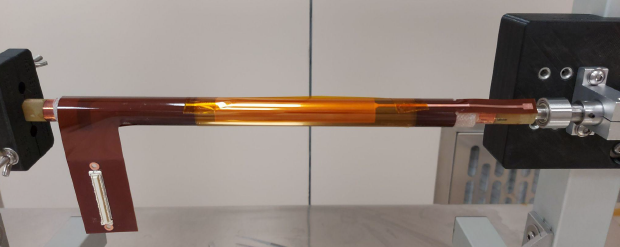
High flow tubular neutron detector based on μRWELL
The present invention refers to the field of safety of nuclear power plants and the monitoring of the flux of neutrons coming out of the nucleus...
- Sensors and Advanced Electronics
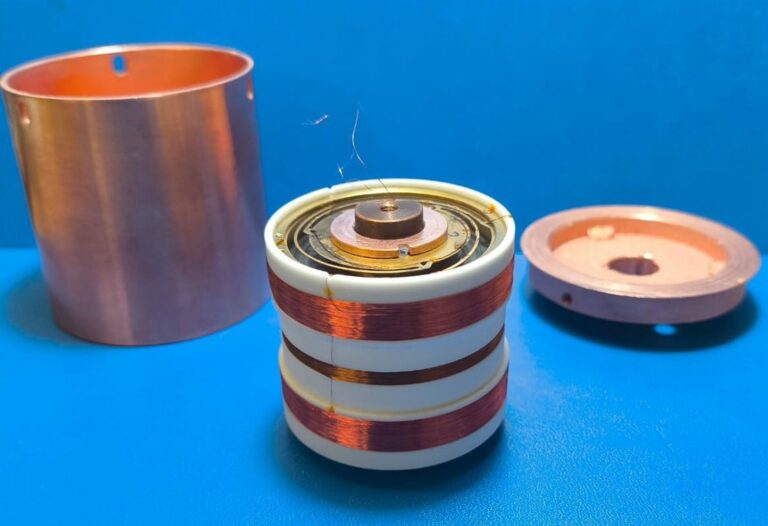
Cryogenic geophone with constant response between ambient temperature and temperatures close to absolute zero
The patented invention relates to the field of vibration measurement by means of an inertial detector. In particular, the patent deals with...

- Sensors and Advanced Electronics
Method of making a diode radiation sensor with carbon incorporation
The technology concerns the field of diode sensors, with particular reference to radiation sensors. In particular, it finds application especially in...

Contact us
Can this technology help your business?
Tell us about your project: the TT Service puts you in touch with the researchers who have developed the technology and evaluates with you the most suitable form of collaboration.
Contact the TT Service