




- Accelerators and Beam Technologies
- Industrial Automation and Sensory
- Advanced manufacturing
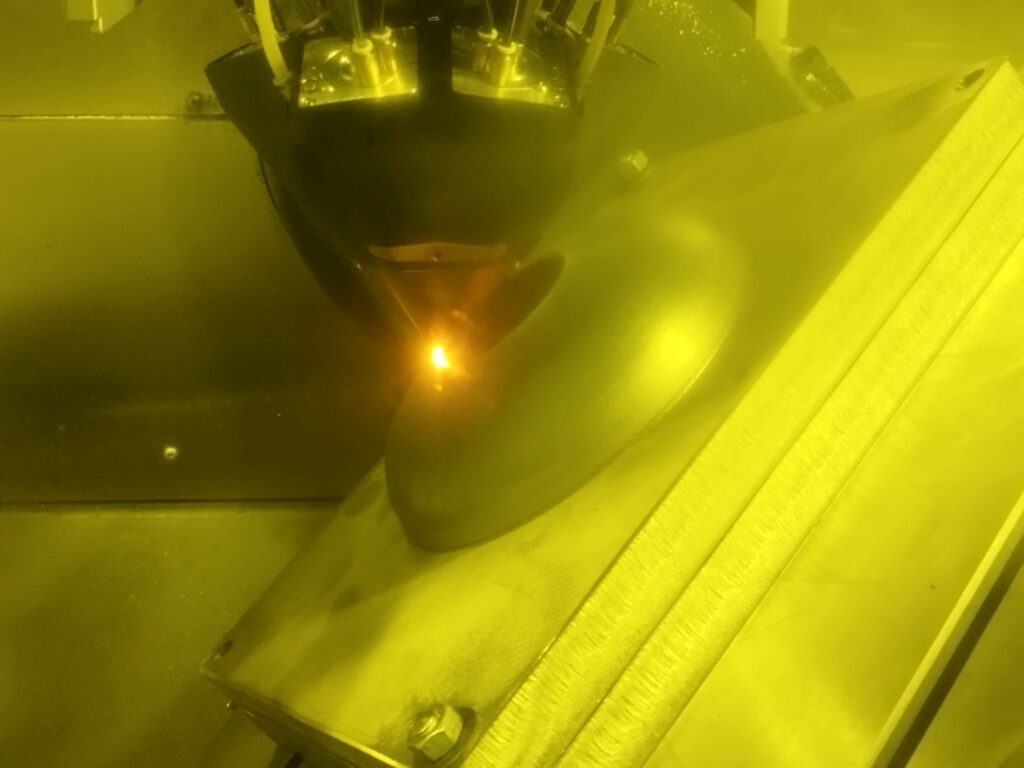
Realization of accelerating cavities by 3D printing from wire
Benefits
Why choose this technology
The strengths of this technology.
Elimination of welds.
Improved surface finish.
Possibility of creating larger cavities.
Multimaterial.
Vacuum production.
Replacement of traditional technique.
Technology
How it works
Method of making an accelerating cavity of the superconductive or normal-conductive type of particles, comprising: a flush-printing phase followed by a finishing phase on the inner surface of that cavity.
The proposed invention aims to solve a critical problem in the production of superconductive accelerating cavities for particle accelerators. The technology currently approved for the production of these cavities involves the welding of semi-cells through sheet turning and vacuum electron beam welding. However, welding creates surface discontinuities, which in the presence of high accelerating fields can generate the emission of secondary electrons. These electrons cause localised heating on the surface and, in cascade, lead to the loss of superconducting performance, a phenomenon that compromises the effectiveness of cavities.
To overcome these problems, the invention proposes an innovative technique for the production of accelerating cavities without the use of welds, using wire printing combined with a robotic mechanical arm. The mechanical arm is essential for the finishing and accurate processing of the internal and external surfaces of the cavity, further reducing the possibility of defects. This new methodology allows the creation of single material or multimaterial accelerating cavities, exploiting wire printing for the creation of the component. The process also allows the internal and external finishing of the cavity through material removal processing during the construction phase. This approach can be performed both in inert environments at atmospheric pressure and in vacuum conditions.

Are you interested in this technology?
Ask us for availability, license terms or more detailed technical material. The TT Service answers you.
Applications
Where this technology is applied
The areas in which this technology offers the greatest advantage.
Particle physics
Production of nuclear fusion devices
Medical applications such as magnetic resonance imaging
Explore
Other technologies in Industrial Automation and Sensory
- Industrial Automation and Sensory
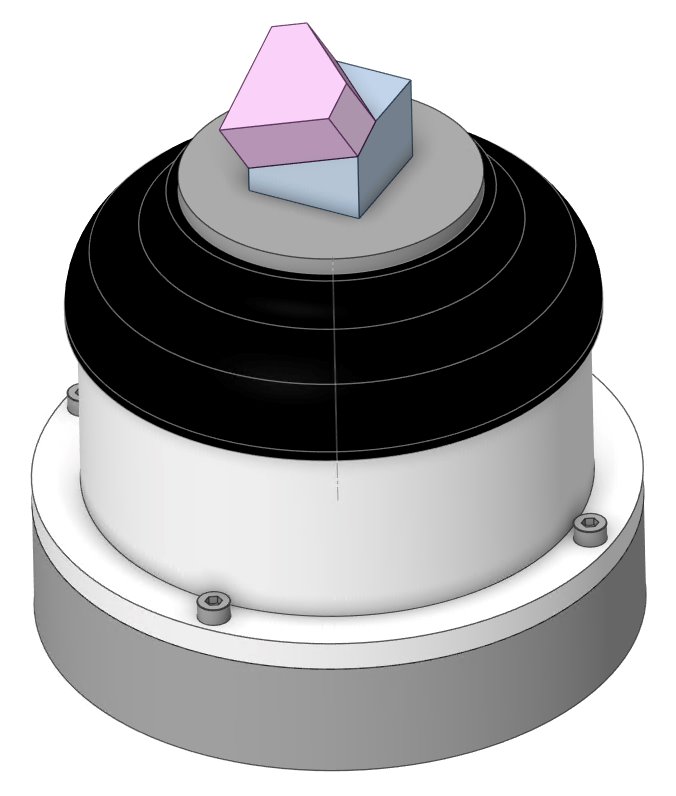
PBF-LB apparatus and process for the additive manufacturing of mono- and multi-material objects
The apparatus enables the additive production of metal multimaterial objects using Powder Bed Fusion – Laser Based (PBF-LB) technology.
- Industrial Automation and Sensory
Perovskite optical sensors
Technology to produce pixel matrix sensors based on single perovskiti crystals. The technique allows to grow single crystals of the...
- Advanced manufacturing
Plasma electropolishing of copper, steel and zinc alloy components, nickel, chromium and other metals with single-component electrolytic solution
Innovative electrolytic composition and related Plasma Electrolytic Polishing (PEP) process for finishing metal surfaces. Technology allows you to reduce...

Contact us
Can this technology help your business?
Tell us about your project: the TT Service puts you in touch with the researchers who have developed the technology and evaluates with you the most suitable form of collaboration.
Contact the TT Service