




- Sensors and Advanced Electronics
Spark detector in the absence of reflection elements

Benefits
Why choose this technology
The strengths of this technology.
Minimisation of the background noise of the captured image.
Maximization of the relationship between detected light and emitted light.
Low maintenance cost.
Fewer elements subject to radiation deterioration.
Technology
How it works
In the context of the detection of ionizing particles and the two-dimensional reconstruction of their spatial characteristics, traditional technologies have limitations in terms of footprint, spurious reflections and sensitivity to ambient light. This invention fits into this scenario by proposing a compact system, without mirrors, capable of improving acquisition quality by reducing background noise and simplifying the detector architecture.
The present technology aims to solve the technical problem of providing a two-dimensional reconstruction system of the detectable characteristics on a plane transverse to the direction of propagation of a beam of ionizing particles, overcoming the drawbacks associated with the known technique.
This problem is solved by an innovative scintillation detection system without a mirror, characterized by a series of constructive and functional devices. The system includes: (i) an internally coated envelope of matt black colour, which prevents reflection of the internal light; and (ii) an opening on the casing at which a transparent polymeric film is placed to the incident particle beam. This film has at least an opaque black surface facing the scintillator and has the function of shielding the inside of the casing from ambient light radiation. The system also includes an acquisition unit, consisting of: (i) an optical focusing system; (ii) an optical sensor; and (iii) a scintillator, the first face of which is tilted in such a way that it is partially facing both the incident radiation and the matrix of optical sensors. In addition, the second face of the scintillator, as well as the lateral edges, are treated superficially with an opaque black coating, with the dual purpose of masking the back of the scintillator and reducing the background noise on the matrix of the optical sensors.

Are you interested in this technology?
Ask us for availability, license terms or more detailed technical material. The TT Service answers you.
Applications
Where this technology is applied
The areas in which this technology offers the greatest advantage.
Medical imaging
High Energy Physics and Scientific Research
Explore
Other Technologies in Sensors and Advanced Electronics
- Sensors and Advanced Electronics
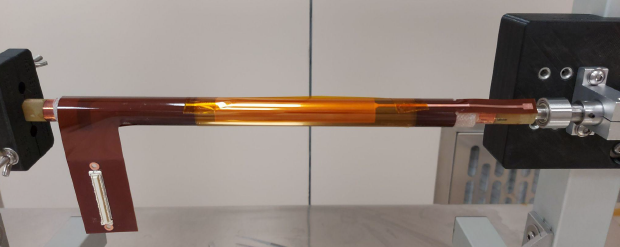
High flow tubular neutron detector based on μRWELL
The present invention refers to the field of safety of nuclear power plants and the monitoring of the flux of neutrons coming out of the nucleus...
- Sensors and Advanced Electronics
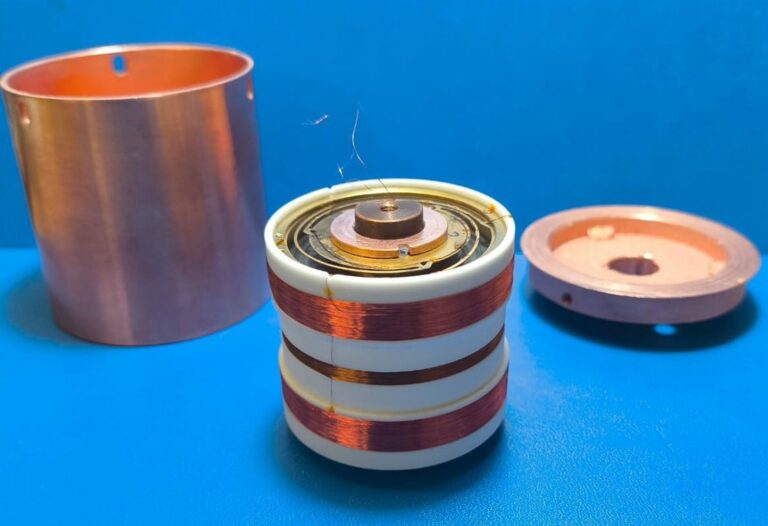
Cryogenic geophone with constant response between ambient temperature and temperatures close to absolute zero
The patented invention relates to the field of vibration measurement by means of an inertial detector. In particular, the patent deals with...

- Sensors and Advanced Electronics
Method of making a diode radiation sensor with carbon incorporation
The technology concerns the field of diode sensors, with particular reference to radiation sensors. In particular, it finds application especially in...

Contact us
Can this technology help your business?
Tell us about your project: the TT Service puts you in touch with the researchers who have developed the technology and evaluates with you the most suitable form of collaboration.
Contact the TT Service