




Insights
The LNGS new national hub for INFN as part of a technology transfer project
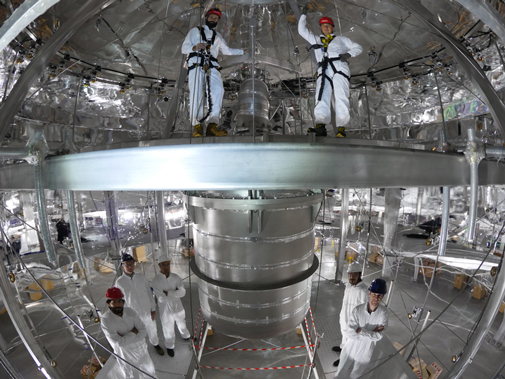
Putting at the service of society the scientific and technological knowledge generated by the National Institute of Nuclear Physics (INFN) within its basic research paths: this is the objective of the project INFN.Open (Open INnovation from Fundamental Nuclear research) The agreement between the INFN and the Agency for Territorial Cohesion kicked off these days.
INFN, in its research activities, has always had the ability to develop tools and equipment with a high technological content. The innovation generated by the Institute’s scientific research can have an important impact on civil and industrial society through the development of skills, infrastructures and technologies developed by the Institute in different areas such as health, environment, cultural heritage, security, aerospace but also innovative technologies for new generation supercomputing. For this reason, in recent years INFN has been actively involved in technology transfer, equipping itself with a unit dedicated to the valorisation and placing on the market of the innovations produced by the Institute. ‘The task of INFN Technology Transfer is to create the path to bring the cutting-edge innovative technologies developed by INFN to society, through the enhancement of specific action tools – states Mariangela Cestelli Guidi, Coordinator of INFN’s National Committee for Technology Transfer – Think of biomedical spin-offs, such as Sybilla Biotech, which has implemented sophisticated theoretical calculation models for the search for new drugs, or the development of advanced thin film deposition technologies for the creation of new components for industrial applications, as happened in the fruitful collaboration between INFN and Eurolls. The INFN.Open project is aimed precisely at strengthening our capacity to intercept new interlocutors in order to take the Institute’s technologies outside our field of action.”
Open INFN, funded with approximately EUR 1.7 million under the Cohesion Action Programme Complementary to the NOP ‘Governance and Institutional Capacity’ 2014-2020, is a national project in which INFN’s Gran Sasso National Laboratories (LNGS) will be the national hub for action. Through specific activities aimed at establishing contacts with companies and the local area, the project will make it possible to optimise the management of technology transfer processes towards companies by promoting the valorisation of the skills available in the Institute. Cino Matacotta, INFN researcher and technical and scientific head of the project – It is about building a new space, made up of tools, procedures and reports, where the results of our research can quickly find a way towards applications”.
The LNGS will support the development of the INFN.Open project for about two years. “I consider it very significant that such an important national project for the INFN will be incardinated in the LNGS – comments Ezio Previtali, Director of the Gran Sasso National Laboratories – The Laboratories have always been involved in various technology transfer activities in collaboration with companies at national level and I am convinced of how much the project will help us to make the transfer process more efficient”. LNGS is the largest and most important operational underground research centre in the world, where cutting-edge research is carried out and cutting-edge technologies that produce development and innovation are developed. Thanks to the peculiarities that characterize them, LNGS are one of the few Italian research infrastructures classified as having a ‘Global’ impact within the National Plan for Research Infrastructures (NIP) 2021-2027, published by the Ministry of Universities and Research as an integral part of the National Research Programme (NRP), thus representing an ideal environment for the development of a project such as INFN.Open.
News
Read also
More news from INFN Technology Transfer.
Particle accelerators at the service of society
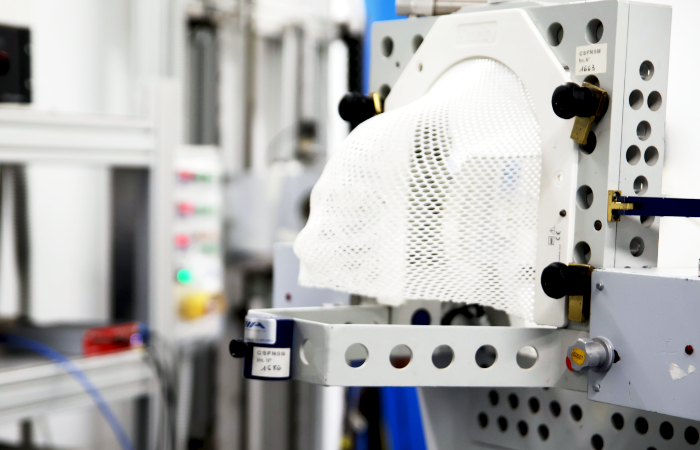
If you think of a particle accelerator, great equipment comes to mind in laboratories dedicated to scientific research. The role of these machines in the study of basic science is certainly very important, however, they are also used for purposes closer to everyday life. Among the different applications of accelerators, the most significant are probably those related to medicine and cancer treatment.
L as Lead
To reach the market, a technology born in the laboratory needs to be accompanied along a path that goes from identifying its application potential to valorisation, through constant monitoring and support. This is the role that the INFN Technology Transfer Service, together with the National Committee for Technology Transfer (CNTT) and the network of local representatives plays every day, that is to act as a lead, a guide, between basic physics and the productive world. Lead is a structured process that connects laboratories, researchers, companies, investors and institutions to transform skills and knowledge into concrete innovation capable of generating value for society.
From Laboratory to Patient: The Role of INFN Technology Transfer in Life Sciences
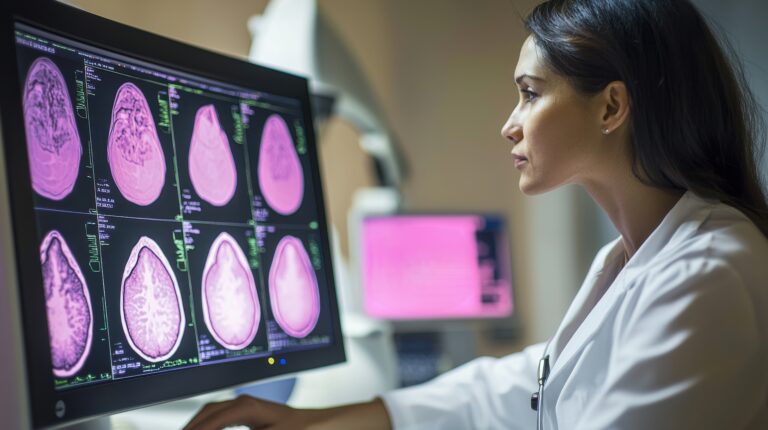
From laboratory to patient: the role of INFN Technology Transfer in medical physics The point of view of Mariangela Cestelli Guidi, coordinator of INFN's National Committee for Technology Transfer
Contact us
Want to collaborate with INFN?
Tell us about your need: the TT Service puts you in touch with the right people and skills for your project.
Contact us