




Insights
A as Application
Scientific research, in addition to enriching the cultural heritage of humanity, generates concrete, and sometimes unexpected, repercussions on society.
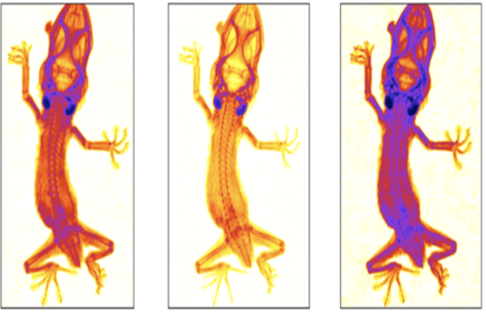
Scientific research, in addition to enriching the cultural heritage of humanity, generates concrete, and sometimes unexpected, effects on society.
Science is not only synonymous with theoretical exploration or academic research: the potential of the knowledge acquired in laboratories emerges when they are applied concretely in the real world. In this context, technology transfer procedures play a crucial role, allowing to accelerate or even make possible the transformation of years of scientific research into tangible solutions to solve industrial problems, optimize production processes and create innovative products, with an impact on society. A significant example of this approach is the Istituto Nazionale di Fisica Nucleare (INFN), which, through technology transfer, highlights the strategic importance of technological application as a driver for economic and industrial growth.
How can a laboratory technology find concrete application on the market?
The transfer of a technology from the research and development phase to industrial use is a complex but fundamental process, which can be described through: Technology Readiness Levels (TRL). These levels, ranging from TRL 1 (observed basic principles) to TRL 9 (demonstrated and validated system in an operational environment), represent the steps that a technology must pass to move from the laboratory to the market. Each level indicates a different degree of technological readiness, starting from initial experimentation to large-scale practical demonstration.
A concrete example of this path occurs in the transition from TRL 4, which implies the validation of the technology in the laboratory, to TRL 6 or 7, in which the prototype is demonstrated in relevant or operational environments. This step is a crucial moment for the interaction between research and industry. This is where the main challenges emerge, such as adapting technology to the specific needs of the industrial sector and validating its application potential. There are two crucial steps: between TRL 3 and 4 and between TRL 6 and 7.
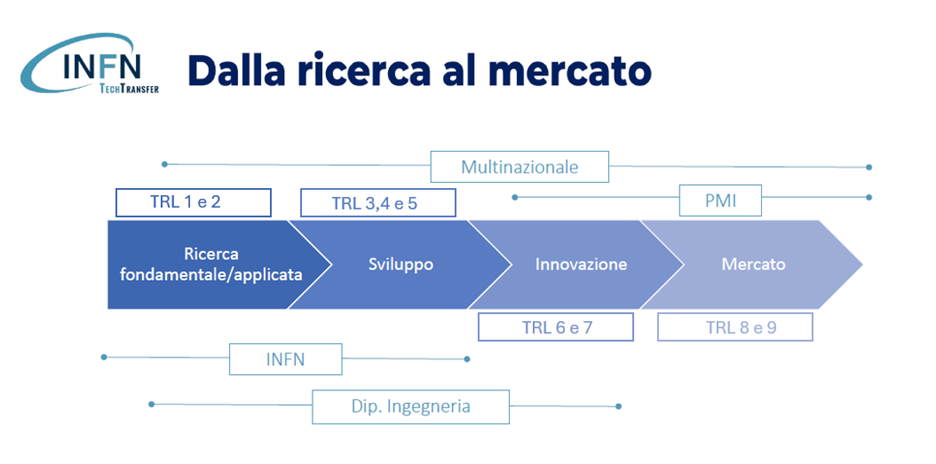
An example, in the INFN field, is the development of the detector Pixirad.
Born within the Pisa Section of the INFN, Pixirad is the result of the advanced skills acquired in the field of detector physics and is based on the innovative technology of single photon counting spectroscopic. Intuition of combining pixel sensors with processors VLSI made it possible to design an X-ray detector capable of offering high sensitivity with a low dose of radiation, a crucial advantage for both industrial and medical applications.
Initially validated in the academic field, this technology has passed the development phase thanks to the Birth of the spin-off in 2012 Pixirad S.r.l., founded by five INFN researchers. The spin-off initially operated within INFN, leveraging advanced facilities such as cleanrooms for industrial-scale development and production. This phase, which required a strong collaboration between research and industry, made it possible to adapt Pixirad to the concrete needs of the application sectors.
The innovation and potential of this technology emerged strongly in 2017, when Malvern Panalytical, an international leader in X-ray analysis systems, acquired Pixirad. This agreement, which included the transfer of patents and technological know-how by inventors and INFN, marked the definitive entry of the technology into the global market. Today Pixirad stands for technological excellence, revolutionising the imaging sector thanks to its ability to combine high sensitivity and low radiation dose, a crucial element for industrial and medical applications.
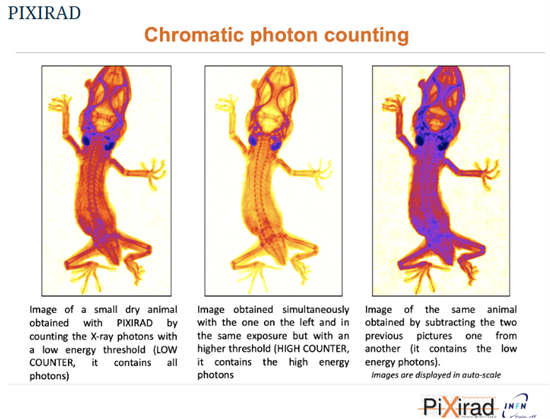
The result?
Pixirad's history demonstrates how technology transfer, driven by an effective synergy between research, development and innovation, can lead to concrete solutions that revolutionize entire industrial sectors. At the same time, this case highlights the crucial role of institutions such as INFN, capable of transforming advanced scientific results into successful technologies on the market, generating a significant economic return and strengthening its position as a catalyst for innovation globally.
Find out more
News
Read also
More news from INFN Technology Transfer.
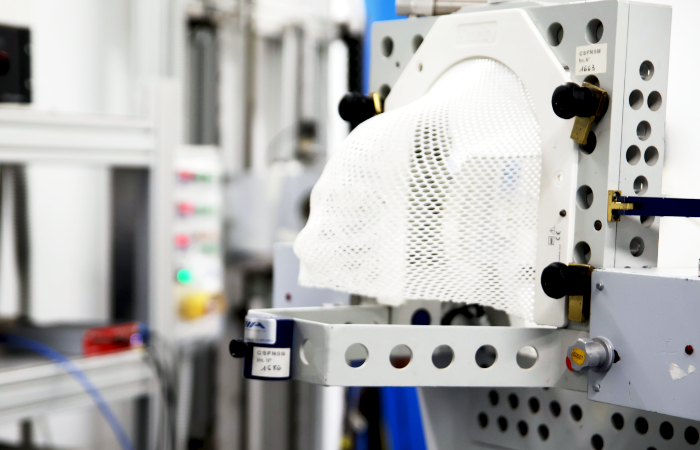
Particle accelerators at the service of society
If you think of a particle accelerator, great equipment comes to mind in laboratories dedicated to scientific research. The role of these machines in the study of basic science is certainly very important, however, they are also used for purposes closer to everyday life. Among the different applications of accelerators, the most significant are probably those related to medicine and cancer treatment.
L as Lead
To reach the market, a technology born in the laboratory needs to be accompanied along a path that goes from identifying its application potential to valorisation, through constant monitoring and support. This is the role that the INFN Technology Transfer Service, together with the National Committee for Technology Transfer (CNTT) and the network of local representatives plays every day, that is to act as a lead, a guide, between basic physics and the productive world. Lead is a structured process that connects laboratories, researchers, companies, investors and institutions to transform skills and knowledge into concrete innovation capable of generating value for society.
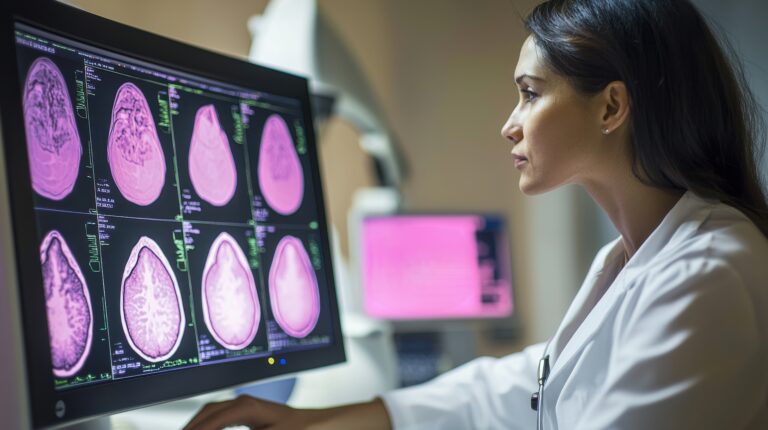
From Laboratory to Patient: The Role of INFN Technology Transfer in Life Sciences
From laboratory to patient: the role of INFN Technology Transfer in medical physics The point of view of Mariangela Cestelli Guidi, coordinator of INFN's National Committee for Technology Transfer
Contact us
Want to collaborate with INFN?
Tell us about your need: the TT Service puts you in touch with the right people and skills for your project.
Contact us