




Insights
B as Patent
Innovation finds its full meaning when an idea is transformed into a concrete solution, capable of generating value for society and the economy.
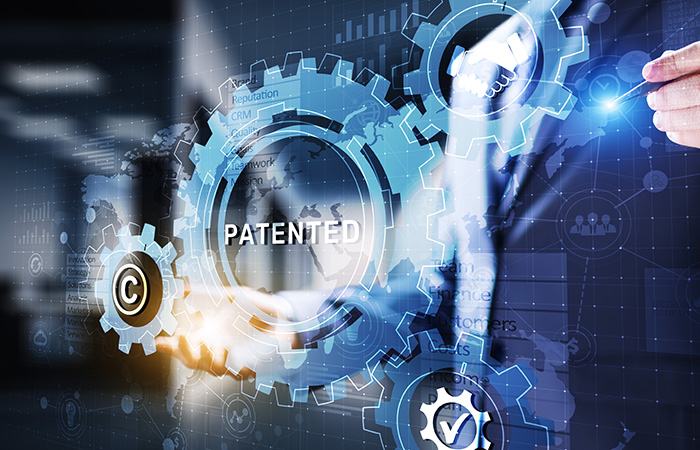
Innovation finds its full meaning when an idea is transformed into a concrete solution, capable of generating value for society and the economy.
In the process of innovation, the patent plays a fundamental role: not only to protect intellectual property, but also to incentivise investment e promote the valorisation of innovations, transforming insights into tools for economic and industrial growth.
But what exactly are patents and what is their importance?
What is a patent
A patent is an exclusive right that grants the holder control over the commercial use of his invention for a limited period, usually 20 years. Three are the main requirements. First of all, it must be a new solution, i.e. one that has never been disclosed before, satisfying the criterion of new. Secondly, it must involve inventive activity, that is to say, it must not be obvious to an expert in the field, ensuring that’originality of the idea. Finally, it must be able to be used concretely in at least one industrial sector, demonstrating its practical utility.
How the patent works
The process for obtaining a patent varies depending on the national or international context, but the objective, in both cases, remains unchanged: to transform an idea into a strategic asset, capable of generating economic value. In the specific case of Italy, the request must be submitted to theOffice Italian Patents and Trademarks (opens in a new window) (UIBM), while at international level, within the European regulatory framework, there are instruments that simplify the process and that allow protection to be obtained with a single request on a number of territories that are parties to the Convention:
- Patent Cooperation Treaty (PCT): allows only one application to be filed to temporarily protect an invention (up to 30 months) in the 158 acceding countries.
- European patent: managed by the European Patent Office (EPO), it allows protection to be obtained in several European countries through a single examination procedure.
- European Unitary Patent: introduces uniform protection in several Member States of the European Union.
These tools offer flexibility and greater accessibility to global markets, supporting companies and researchers operating in an increasingly international context.
The strategic value of protection
Patent is much more than just an exclusive right; is a strategic tool that protects innovation, It prevents others from commercially exploiting the idea without authorisation. In addition, facilitates collaboration, as it allows the sharing of inventions with industrial partners through licensing agreements, creating the conditions for one competitive market development, stimulating ingenuity and ensuring economic returns to those who invest in research and development. Importantly, patents in no way restrict freedom of research, while protecting commercial exploitation.
Patents and innovation: an essential combination
Patents, therefore, are not only legal instruments, but real drivers for innovation. They offer companies a period of commercial exclusivity that justifies the risks associated with investing in research and development. In this way, companies can focus their resources on creating advanced technologies, knowing that they can count on a competitive advantage.
“The patent is not a milestone, but the start of a strategic path,” states Ilaria Giammarioli, Head of INFN Technology Transfer Service It deals, among other activities, with: negotiation of the grant or assignment of intellectual property. “After filing, the invention can evolve, adapt to the market and create value through research-industry collaboration. Licences expand their diffusion, ensuring economic returns and new development opportunities. In addition, the patent provides time to explore novel applications, turning ideas into concrete solutions for industrial, environmental and social challenges.”
Find out more
WIPO (https://www.wipo.int/portal/en/index.html (opens in a new window)), is the global intellectual property organisation, promoter of the above-mentioned international patent convention known as PCT.
EPO (https://uibm.mise.gov.it/index.php/it/brevetti/brevetto-europeo-con-effetto-unitario (opens in a new window)), is the European Patent Office, i.e. a supranational body that manages patent granting procedures at European level.
Italian Patent and Trademark Office (UIBM), which manages national patents in Italy according to the following scheme: https://uibm.mise.gov.it/images/Iter.pdf (opens in a new window)
Contacts
Ilaria Giammarioli – Ilaria.giammarioli@lnf.infn.it
News
Read also
More news from INFN Technology Transfer.
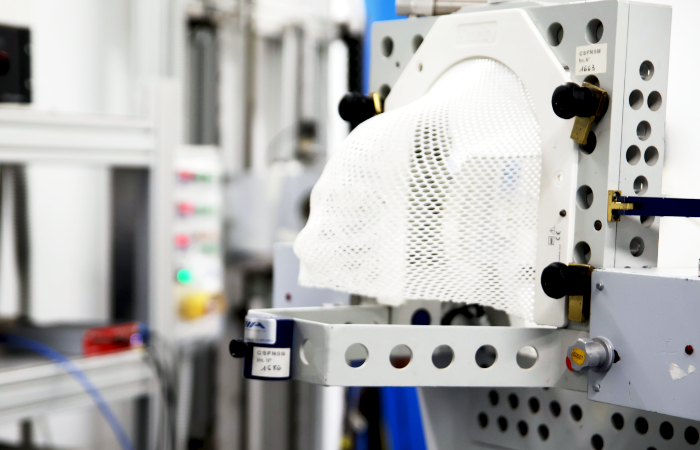
Particle accelerators at the service of society
If you think of a particle accelerator, great equipment comes to mind in laboratories dedicated to scientific research. The role of these machines in the study of basic science is certainly very important, however, they are also used for purposes closer to everyday life. Among the different applications of accelerators, the most significant are probably those related to medicine and cancer treatment.
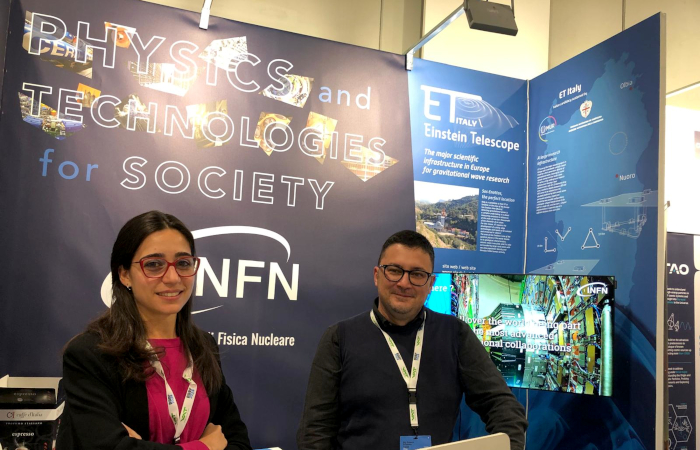
L as Lead
To reach the market, a technology born in the laboratory needs to be accompanied along a path that goes from identifying its application potential to valorisation, through constant monitoring and support. This is the role that the INFN Technology Transfer Service, together with the National Committee for Technology Transfer (CNTT) and the network of local representatives plays every day, that is to act as a lead, a guide, between basic physics and the productive world. Lead is a structured process that connects laboratories, researchers, companies, investors and institutions to transform skills and knowledge into concrete innovation capable of generating value for society.
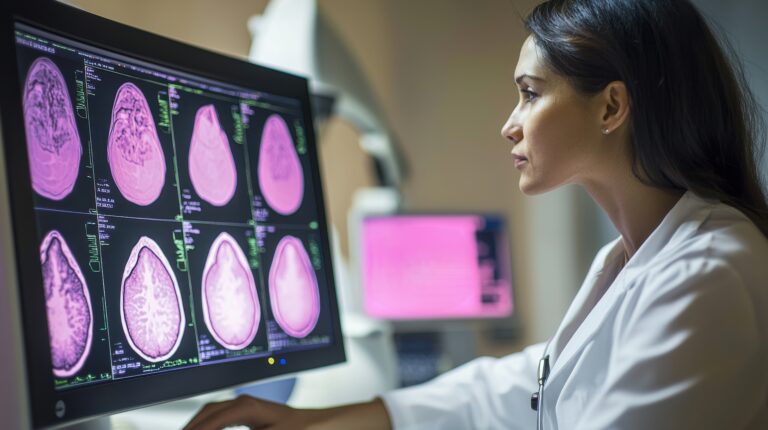
From Laboratory to Patient: The Role of INFN Technology Transfer in Life Sciences
From laboratory to patient: the role of INFN Technology Transfer in medical physics The point of view of Mariangela Cestelli Guidi, coordinator of INFN's National Committee for Technology Transfer
Contact us
Want to collaborate with INFN?
Tell us about your need: the TT Service puts you in touch with the right people and skills for your project.
Contact us