




Technologies
European space technologies: INFN’s contribution to the Galileo geolocation system
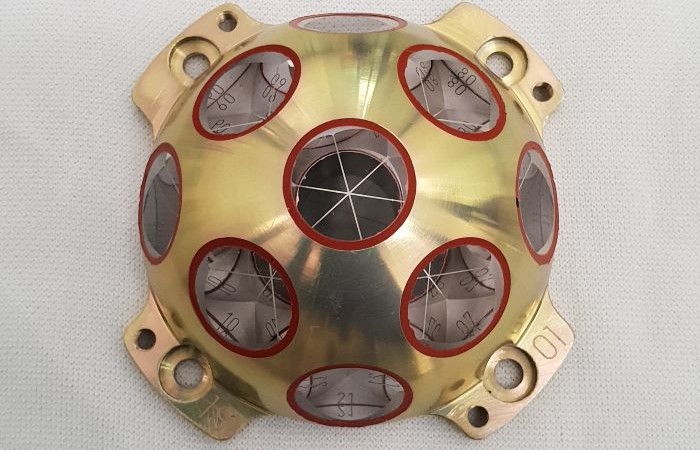
From the Frascati National Laboratories, scientific research and technology transfer at the service of the new European leadership in space.
Geolocation is now an essential technology for everyday life, from navigation to transport, to safety. When we use the car navigator or check the position of an aircraft, we rely on satellite geolocation systems, from which we expect a guarantee of absolute, stable precision and above all anchored to the Earth’s metric reference system.
However, obtaining extremely accurate spatial measurements is by no means a given: what would happen if these systems had too high a margin of error?
The Galileo project: independence and precision for Europe
It is in this context that was born Galileo, the European civil satellite navigation system, designed to ensure unprecedented accuracy and to reduce Europe’s dependence on foreign technologies. An ambitious project, in which Italy – and in particular the Istituto Nazionale di Fisica Nucleare (INFN) – has played a strategic role, thanks to the contribution of researchers such as Simone Dell’Agnello, Scientific Coordinator at INFN’s SCF Lab at the Frascati National Laboratories.
A pioneer in the use of laser positioning for space applications, Dell’Agnello has led the development of key technologies to improve Galileo’s accuracy.
Galileo and technological innovation: a question of precision
Until the 2010s, Europe relied on foreign military geolocation systems, such as the US GPS and the Russian GLONASS. But how sustainable was it, in the long run, to rely on non-European infrastructure? And above all, was it possible to guarantee maximum precision without full technological control? The answer was clear: not enough. For this reason, the European Commission, together with the European Space Agency (ESA), have started the development of Galileo, the first global satellite positioning system exclusively for civilian and fully European use, with the stated aim of making it the most accurate in the world. To achieve this, cutting-edge technologies and collaboration with excellent research institutions were needed. This is where theINFN, with the key contribution of Simone Dell’Agnello and his team.
The INFN laboratory in Frascati: where theory becomes reality
To transform Galileo into the world's most precise and independent geolocation system, a technological leap was needed.
“When we started working on lasers applied to geolocation, in Europe we were pioneers in a field that did not yet exist as it does today.“, explains Dell’Agnello.”The idea was to provide technological support that would make Galileo a world-class reference system for high precision, and with our laser retro-reflectors we have contributed to this achievement“.
Thanks to intensive development, testing and certification work, the new Galileo 2nd Generation satellites will soon be equipped with entirely European technologies. The INFN laboratory in Frascati has played a crucial role, producing, testing and validating retro-reflectors to ensure their reliability and contributing to the definition of European standards for spatial geolocation. This made Galileo a more autonomous and precise system, eliminating dependence on foreign technologies and strengthening European leadership in the sector.
But innovating is never easy.”We faced not only technological, but also procedural and contractual obstacles“, underlines Dell’Agnello.”Carrying out research in this area means not only developing new tools, but also finding ways to integrate them into an operational and commercial context“.
In fact, a key step was the start of collaboration between INFN and ESA, a cooperation model that allowed INFN to qualify as a space technology provider on a par with other leading companies in the field.
“We have paved the way for the supply of technologies to ESA originating from INFN research.” explains Dell’Agnello. “This has not been explored before, but is now a strong point for INFN and the Italian space sector.”
This experience has allowed INFN to participate in international consortia such as: LISA, developing state-of-the-art technological solutions to meet the new challenges of space.
A future of opportunity: synergies between public and private
The growing openness of the space sector to private actors brings with it new challenges, but also important opportunities. The INFN, thanks to its long-standing experience, is ready to embrace this evolution. In this context, the model of collaboration between public and private developed in recent years can represent an increasingly central strategic lever in the programs of the future.
“Science never stops“, concludes Dell’Agnello, “We are ready to bring our expertise into the future of space exploration. We are already looking, for example, at new projects such as ESA satellites for lunar navigation and communications: the start of a lunar Galileo system, called Moonlight“.
News
Read also
More news from INFN Technology Transfer.
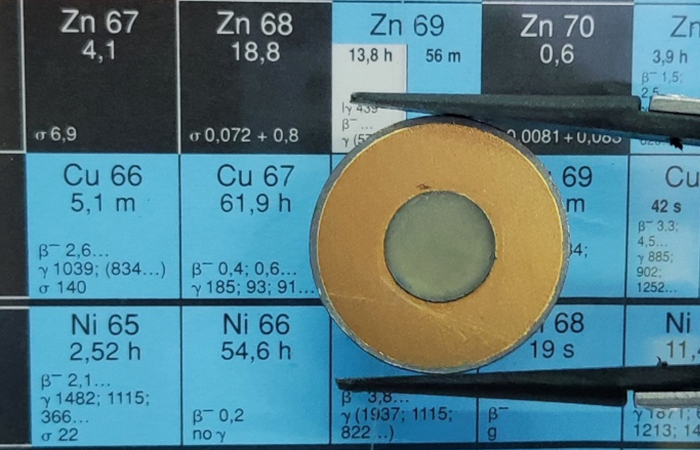
INFN technology allows the first production of copper-67 in Italy
The collaboration between the National Laboratories of Legnaro of INFN, the University of Ferrara and the IRCCS Sacro Cuore Don Calabria of Negrar (VR) has reached an important milestone for Italian nuclear medicine, opening new perspectives for the national production of teranostic radionuclides: the first production, in our country, of copper-67 (67Cu), one of the most promising radionuclides for the diagnosis and treatment of various oncological diseases.
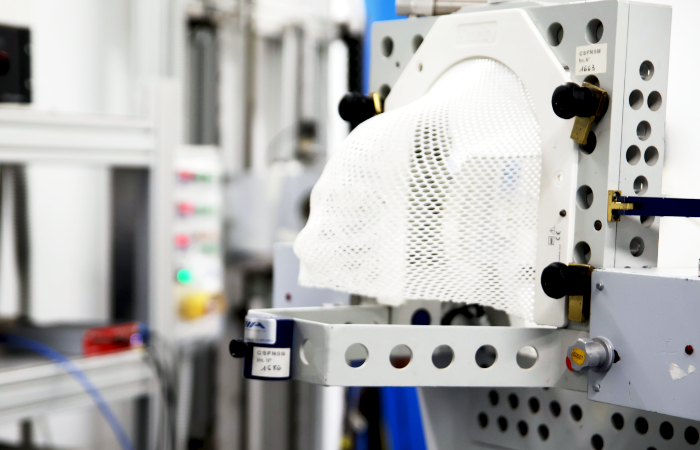
Particle accelerators at the service of society
If you think of a particle accelerator, great equipment comes to mind in laboratories dedicated to scientific research. The role of these machines in the study of basic science is certainly very important, however, they are also used for purposes closer to everyday life. Among the different applications of accelerators, the most significant are probably those related to medicine and cancer treatment.
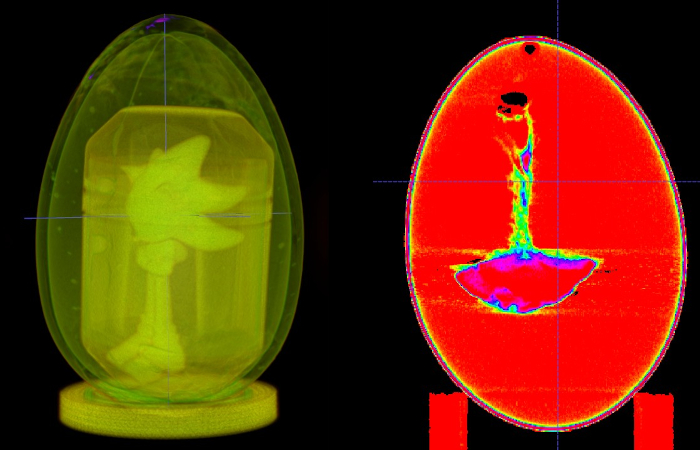
New frontiers in X-ray computed tomography for patient diagnosis and treatment
Antonio Sarno, researcher of the INFN section in Milan, works to make X-ray tomography with a conical beam more and more accurate.
Contact us
Want to collaborate with INFN?
Tell us about your need: the TT Service puts you in touch with the right people and skills for your project.
Contact us