




Insights · Events
Innovation and sustainability: INFN's contribution to the future of accelerators
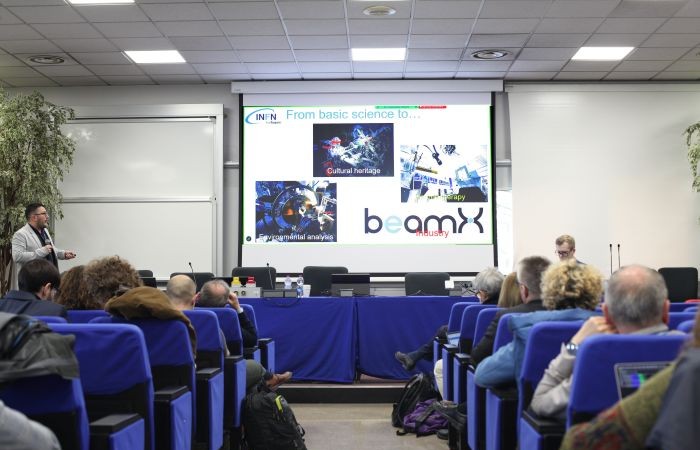
INFN brings its experience on energy efficiency and technology transfer to industry to the iSAS Padova Meeting
iSAS, Innovate for Sustainable Accelerating Systems (opens in a new window), is a strategic project funded by the European Union for technological innovation and sustainability, which aims to speed up the development and adoption of energy-saving technologies in particle accelerators by fostering collaboration between research institutes and leading companies in the sector at international level to strengthen Europe’s scientific competitiveness. The first annual meeting of the project, theiSAS Padova Meeting 2025, was organised by the National Institute of Nuclear Physics (INFN) and took place from 12 to 14 March.
Hosted in the National Laboratories of Legnaro (LNL), the meeting was attended by 17 partners from 8 European countries. The intensive programme, which included scientific sessions, meetings on Work Packages (WPs) and dedicated the last day to an industrial workshop, provided a comprehensive overview of the progress made and the challenges ahead. The annual iSAS meeting is an opportunity to consolidate the dialogue between research and industry, to share scientific and technological progress and to define common strategies to accelerate innovation. In this context, technology transfer plays a key role.
INFN: an engine of technological innovation
As the host institution of the meeting and active protagonist of the project, INFN played a leading role on this occasion thanks to the numerous interventions of the representatives of the institution, who highlighted not only their own innovations, but also the value of technology transfer for the industry.
INFN's contributions were both general and technical. Oscar Azzolini, technologist at LNL-INFN, and leader of Work Package 7 on “Integrations in industrial applications”, and Giorgio Keppel, Head of the LNL-INFN Research Division, deepened the themes of WP7, the Work Package dedicated to relations with the industrial sector.
“For us, strengthening collaborations with industry is essential.” explained the two experts. ‘Moments such as these, for comparison and exchange, favour the entry of our innovations directly into the market and the acquisition of technologies not yet available in research centres’ ‘The iSAS meeting’, add, “It was also an opportunity to demonstrate how our contribution can actively support the industrial sector: INFN is not only a buyer of technologies developed by industry, but a proactive player in providing innovations and technological solutions to companies, thus contributing to the development of new industrial products and processes.”.
How to improve collaboration between industry and research?
This is the question that animated the industrial workshop, one of the central events of the iSAS event, dedicated to meeting companies, some of which are new to the project. Among the industries present: ACS, Euclid Technologies, Zanon, RI Research Instruments, DB Science, Novatec, SAES Getters High Vacuum Division, Eurolls and Meltio.
INFN’s work and contribution in this area was highlighted by Diego Tonini, representative of INFN Technology Transfer Service, which presented data on the global particle accelerator market, and presented the company’s technology portfolio, highlighting the key role of technology transfer offices as a bridge between research and industry.
During the workshop, the main difficulties in collaborations between the two worlds emerged, the need to define clear specifications from the outset, the contrast between long research times and fast industry needs, and the importance of protecting innovations through patents before publication. A possible solution to improve the dialogue would be a revision of industrial design, with an active involvement of companies already in the design phases: “Overcoming these challenges”, stressed Tonini, “could make collaboration more fluid and accelerate the development of innovative and competitive solutions”.
A look to the future
“iSAS has not only been a showcase for innovation, but a starting point for building together a future of more sustainable and efficient accelerators, with INFN at the forefront as a catalyst for change, leveraging technology transfer as a fundamental bridge between research and industry,” Tonini added.
At the end of the event, the objective of INFN is to: Continue on the path to efficiency, developing cutting-edge technologies and forging alliances with industry to accelerate the uptake of innovative solutions. The next steps will include consolidating the collaborations initiated during iSAS, with a continuous focus on reducing environmental impact and expanding the technology portfolio, to make a real difference in society, both in innovation and sustainability.
Look at the photo gallery (opens in a new window)
News
Read also
More news from INFN Technology Transfer.
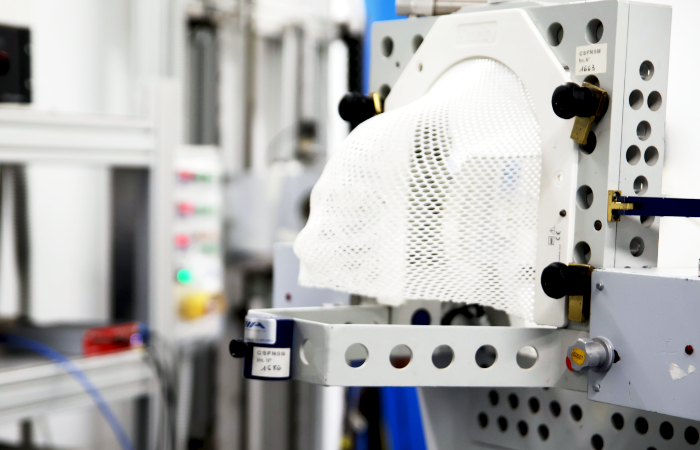
Particle accelerators at the service of society
If you think of a particle accelerator, great equipment comes to mind in laboratories dedicated to scientific research. The role of these machines in the study of basic science is certainly very important, however, they are also used for purposes closer to everyday life. Among the different applications of accelerators, the most significant are probably those related to medicine and cancer treatment.
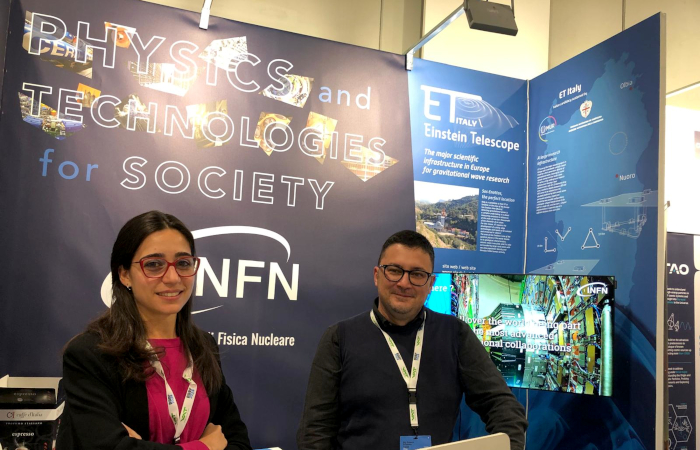
L as Lead
To reach the market, a technology born in the laboratory needs to be accompanied along a path that goes from identifying its application potential to valorisation, through constant monitoring and support. This is the role that the INFN Technology Transfer Service, together with the National Committee for Technology Transfer (CNTT) and the network of local representatives plays every day, that is to act as a lead, a guide, between basic physics and the productive world. Lead is a structured process that connects laboratories, researchers, companies, investors and institutions to transform skills and knowledge into concrete innovation capable of generating value for society.
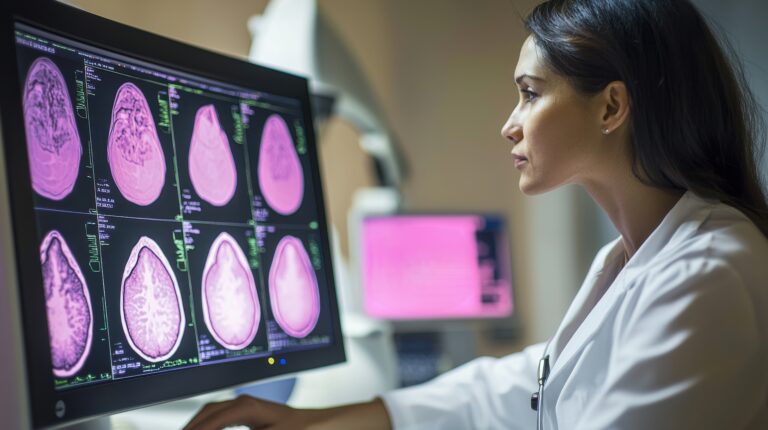
From Laboratory to Patient: The Role of INFN Technology Transfer in Life Sciences
From laboratory to patient: the role of INFN Technology Transfer in medical physics The point of view of Mariangela Cestelli Guidi, coordinator of INFN's National Committee for Technology Transfer
Contact us
Want to collaborate with INFN?
Tell us about your need: the TT Service puts you in touch with the right people and skills for your project.
Contact us