




Insights
C as communication
When search results in value, words also matter. Technology transfer is one of those fundamental processes that often act silently. Yet, it is the gear that allows scientific knowledge to exit laboratories and become something concrete: a solution, an application, a service. But if it is not told, even the most advanced innovation risks remaining invisible.

When search translates into value, words also count
Technology transfer is one of those fundamental processes that often act silently. Yet, it is the gear that allows scientific knowledge to exit laboratories and become something concrete: a solution, an application, a service. But if it is not told, even the most advanced innovation risks remaining invisible.
Today more than ever, communicating technology transfer (TT) is not an accessory choice, but a strategic step. Telling it means making it accessible, understandable, valued. It is how a public research body like INFN demonstrates that the science it produces can generate social, economic and cultural impact.
It underlines this clearly Antonella Varaschin, Responsible for INFN Institutional and Media Communication (opens in a new window): “Communicating technology transfer means recognising that science has an impact, and that this impact needs to be shared. Explaining how an intuition or a solution developed for research can become a useful tool for society is an act of responsibility towards the community.”
How does this vision translate?
Every day, INFN laboratories see the continuous development of ideas, the refinement of technologies, the discovery and pursuit of new solutions. Many of these are born to respond to needs related to fundamental physics, but find Applications in different sectors: from medicine to security, through cultural goods and the energy transition.
The communication, in this context, can become a strategic and effective tool to amplify what has been discovered and / or achieved, allowing to achieve objectives other than purely scientific but equally important for the research itself:
- Strengthening the bond of trust: By creating a common language between science, institutions and citizens, communication strengthens mutual trust and breaks down the barriers that often separate these worlds.
- Creating opportunities for collaboration: communication facilitates understanding by companies, investors and decision-maker, of the real value of what happens in the laboratories, and therefore stimulates new collaborations.
- Enhancing internal awareness: Communication of the activities carried out in the laboratories helps researchers to recognize technology transfer as an integral and fundamental part of their work, which goes beyond scientific publication, positively impacting society.
A story that starts with people
Communicating technology transfer requires method, vision and sensitivity. How do you turn an innovation into a story that truly reaches people in practice? With a accessible but rigorous language, able to adapt to different audiences and contexts. We also need a narrative approach that goes beyond technical data: Telling means putting stories, people and challenges at the centre.
Integrating TT communication into INFN information flows, as well as broader scientific narratives, means strengthening the institution’s positioning also in terms of impact and innovation capacity. It is also important to remember that TT communication cannot be the task of a few. Everyone can be the protagonists: the communicators, of course, but also the researchers, the administrators, the industrial partners.
"The Heart of Work are the people. The INFN Technology Transfer team works side by side with research staff and partners, valuing their skills not only on a technical level, but also on a human and communicative level. Technology transfer is not just made up of inventions, but of relationships.”, recalls Antonella Varaschin:Communicating the TT is not just explaining: is to involve, make understand, create connections”.
INFN’s commitment
With this vision, INFN is increasingly investing resources and attention in communication. A commitment that translates into concrete initiatives, such as the website – updated and dynamic – where news on activities and projects are told with care and clarity, starting from their cataloguing:ABC of Innovation” provides an opportunity to explore the key concepts of technology transfer in alphabetical order; the heading “Behind the scenes of innovation”, instead, it offers an internal look at the INFN.Open project and tells the daily work of the TT team, from international congresses to research calls, up to updates on the sector. ‘From the laboratory to the world’, It then collects success stories, broken down by application areas – from electronics to medicine, from the environment to safety – and shows how the technologies developed in INFN laboratories are concrete in society. With ‘Protagonists of TT’, Finally, people are given a voice: researchers, referents, collaborators and collaborators tell about their paths, their training experiences and the daily life of field work, restoring a human face to innovation.
Also on social, in particular on LinkedIn (opens in a new window), new formats and ways of storytelling are being experimented to reach a professional audience and amplify the visibility of the activities, starting from the personal profiles of the TT team and from what is shared on the INFN page. Finally, the nascent newsletters It will be a tool for dialogue with an ever wider and more diverse community.
And how are researchers involved in this process? INFN has organised focus groups involving them, to investigate their perceptions and needs in relation to the communication of technology transfer, with the aim of making them protagonists of these changes. In addition, the INFN is working on internal training courses focusing on technology transfer, which will be held in the coming months and will be dedicated to TT contact persons.These moments of discussion are key to aligning the communication strategy and ensuring that everyone is a protagonist of this cultural change.
And then, the invitation is simple. To those who work with us, to those who follow us from outside, to those who are curious, to those who want to understand: Get involved. Let yourself be told.
News
Read also
More news from INFN Technology Transfer.
Particle accelerators at the service of society
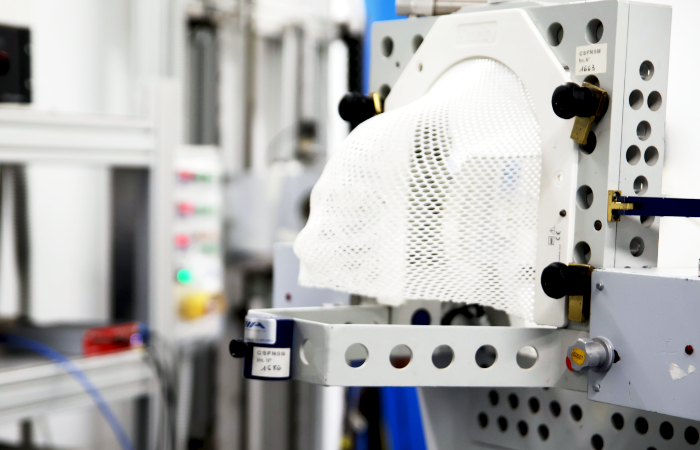
If you think of a particle accelerator, great equipment comes to mind in laboratories dedicated to scientific research. The role of these machines in the study of basic science is certainly very important, however, they are also used for purposes closer to everyday life. Among the different applications of accelerators, the most significant are probably those related to medicine and cancer treatment.
L as Lead
To reach the market, a technology born in the laboratory needs to be accompanied along a path that goes from identifying its application potential to valorisation, through constant monitoring and support. This is the role that the INFN Technology Transfer Service, together with the National Committee for Technology Transfer (CNTT) and the network of local representatives plays every day, that is to act as a lead, a guide, between basic physics and the productive world. Lead is a structured process that connects laboratories, researchers, companies, investors and institutions to transform skills and knowledge into concrete innovation capable of generating value for society.

From Laboratory to Patient: The Role of INFN Technology Transfer in Life Sciences
From laboratory to patient: the role of INFN Technology Transfer in medical physics The point of view of Mariangela Cestelli Guidi, coordinator of INFN's National Committee for Technology Transfer
Contact us
Want to collaborate with INFN?
Tell us about your need: the TT Service puts you in touch with the right people and skills for your project.
Contact us