




Technologies · Events
Additive Manufacturing and Plasma Electropolishing: two technologies developed for particle accelerators but with multiple industrial applications
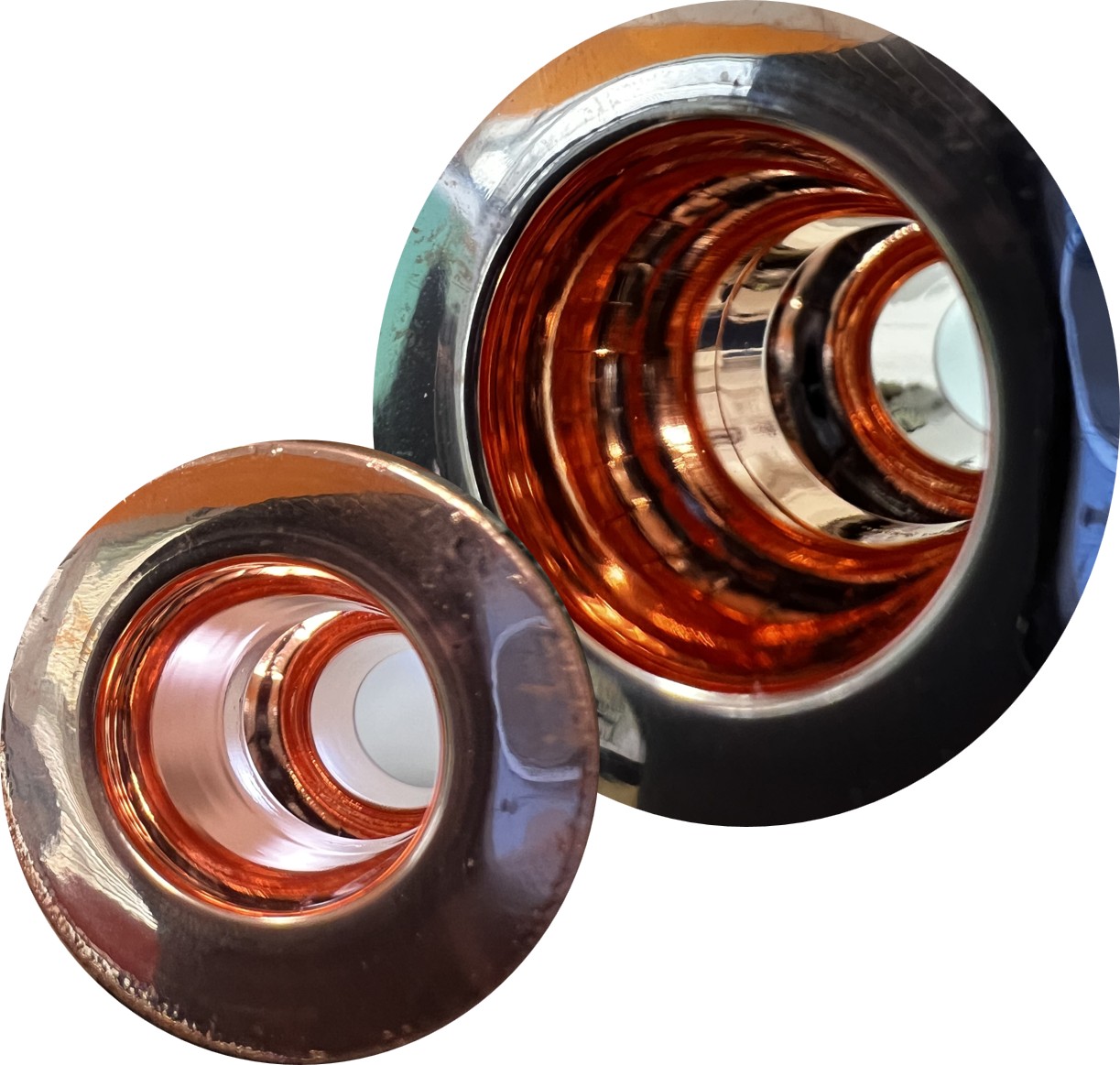
At SRF2025, INFN presents its portfolio of new technologies for the construction and finishing of accelerator cavities
More performance, cheaper, more green
Traditional forming and welding techniques are ineffective, while additive manufacturing (AM) does not give the proper surface finish. This was the problem that Oscar Azzolini, INFN Technologist at the National Laboratories of Legnaro, had in mind while looking for a new method of making resonant cavities for future particle accelerators. And the solution came from the meeting of the two worlds.
"The strength of our method," says Azzolini, who presented preliminary results with a steel test cavity at the conference SRF2025 (opens in a new window) just concluded in Tokyo, ‘we combine wire-based 3D printing (Wire Laser Additive Manufacturing, WLAM) with a mechanical finishing treatment in situ, while the cavity is being built. In this way, alternating growth phases with 3D printing with mechanical processing phases, eliminating the need for welds and preparing the internal surface of the cavity for subsequent polishing steps.”
The performance of a superconducting accelerator cavity, in fact, strongly depends on the surface finish and mechanical treatments fail to make the surface sufficiently smooth. Traditionally, electrochemical polishing (EP) is used to obtain a clean, low-rough surface, but it is slow and requires the use of concentrated acids, which are dangerous for operators and harmful to the environment. For this reason, since 2019, at the National Laboratories of Legnaro, an alternative approach based on the Plasma Electrolytic Polishing (PEP) process is being studied.
“PEP uses diluted solutions of salts, rather than concentrated acids, and offers a number of advantages over traditional electropolishing, which include high process speed (2 – 8 μm/min for Nb and 3 – 30 μm/min for Cu) and final roughness below ten nanometers” he says Eduard Chyhyrynets, technologist at the Legnaro Laboratories and author of a presentation at SRF2025 on the PEP treatment of real cavities. ‘In 2022, we defined the first recipes optimised for PEP on Copper and Niobium’, continues Chyhyrynets, ‘and patented them in 2023. We now have proof that the process is effective on real cavities and allows us to obtain results that are superior to traditional techniques.”
At the heart of accelerators
The resonant cavities are at the heart of a large particle accelerator: these are suitably shaped ‘tubes’, made of superconducting materials such as niobium or high-purity copper, in which the particle beam is accelerated thanks to very high-intensity electric fields.
Said this way it seems simple but, you know, the devil hides in the details and, in this case, the details are the quality of the material and the finish of the inner surface: to support the very high electric fields necessary to accelerate the particles, the cavities must be essentially free of defects: any discontinuity in the material, such as a weld or microscopic roughness on the inner surface, are sufficient to degrade the performance of the cavity and possibly, in the case of superconducting materials, to cause the quenching, The rapid and catastrophic transition from the superconducting state to the normal state.
The construction of a cavity is therefore a technological challenge: the particular shape, the type of materials and the requirements on the finishing of the inner surface make the use of traditional manufacturing techniques extremely expensive and unsustainable. This is why the accelerator community is always looking for new processes and technologies.
A hybrid process
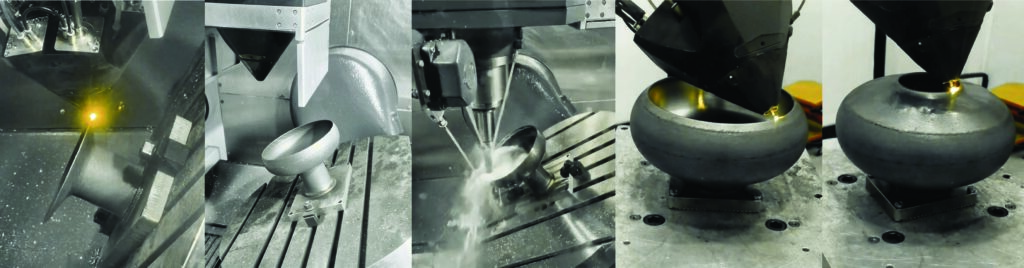
WLAM is a type of additive manufacturing, developed by Meltio 3D (opens in a new window), in which the material with which the workpiece is to be made reaches the print head in the form of wire and is melted locally using lasers. By mounting the print head on a numerical control (CNC) system, it is possible to combine it with a machining process by removing material, such as the mechanical finishing of the surface. “The idea we have patented (opens in a new window) is to create a hybrid process that alternates phases of 3D printing with finishing treatments that would normally have to be done retrospectively’, says Azzolini, ‘obtaining results that are not possible otherwise.’
‘The first test was carried out using steel, a material on which Meltio has more experience’ continues Azzolini, ‘alternating printing phases with mechanical processing in situ with a cutter. The next steps will be to use copper or niobium, so as to create working cavities, and then integrate further processing steps into the process, such as electrochemical polishing or PEP and coating with superconducting thin films.
Plasma Electrolytic Polishing: not just cavities
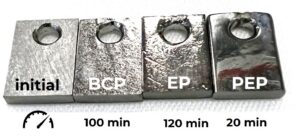
Extremely low final roughness, speed of treatment, use of less dangerous chemicals than classic electropolishing: the strengths of the PEP process make it attractive not only for the treatment of accelerator cavities but also for all components that need a glossy and as smooth as possible surface, from engine components to watchmaking and jewellery. The research carried out at INFN, driven by the need for fundamental physics, is therefore also directly applicable to the industrial world, in sectors completely different from accelerator technology.
‘INFN has been working on PEP since 2019’ says Chyhyrynets, ‘in 2023 we filed 3 patents relating to recipes for the treatment of copper (opens in a new window), niobium (opens in a new window) and their leagues (opens in a new window), but our experience extends to a whole range of metals, including precious ones. We strongly believe in PEP as an alternative and more sustainable process of traditional electropolishing and chemical polishing, and we see ample scope for applicability in the future, also in connection with additive manufacturing.”
A complete technological offer: forming, polishing and coating.
INFN's technological research in the field of accelerator cavities, however, is not limited to WLAM and PEP: SRF2025 was an opportunity to present to the community the latest results on cavity manufacturing through Laser Powder Bed Fusion (LPBF) explored by the DIAM Laboratory (opens in a new window) of the INFN Section of Padua. The work focused on optimising the design and AM process for making copper and niobium cavities, and its combination with PEP finishing.
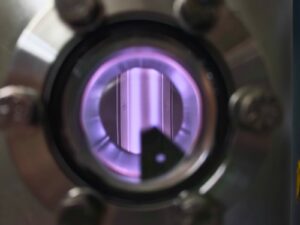
From the point of view of materials, we are focusing on possible alternatives to niobium: at the National Laboratories of Legnaro the development of a system for the deposition of thin layers of Nb is underway3Sn on copper cavity. Unlike those in solid niobium, the Nb cavities3Sn su Cu are a potential step forward in the field, in fact they open the possibility to the construction of small industrial accelerators cooled with cryocooler, without the need for large cryogenic plants that today limit their use to accelerators for research.
Work on Nb3Sn, like those on PEP, were funded by GE INFN within ESPP (European Strategy for Particle Physics) through the SRF R&D for FCC-ee (SRF) project.
SRF2025

SRF is an international conference dedicated to the development of high-performance superconducting cavities, with a focus on emerging technologies for their long-term operation in structures. In addition, initially focused on particle accelerators, it quickly extended to detectors for dark matter, axions, gravitational waves and quantum computers. The 2025 edition (opens in a new window) It took place in Tokyo from 21 to 26 September and was attended by many people from INFN, including: Oscar Azzolini, Davide Ford and Matteo Lazzari with a poster, Eduard Chyhyrynets e Dorothea Fonnesu with a invited talk. the next edition, SRF2027 will be organised by INFN at Padua from 27 June to 2 July 2027 and will have as co-chair Cristian Pira e Daniele Sertore.
News
Read also
More news from INFN Technology Transfer.
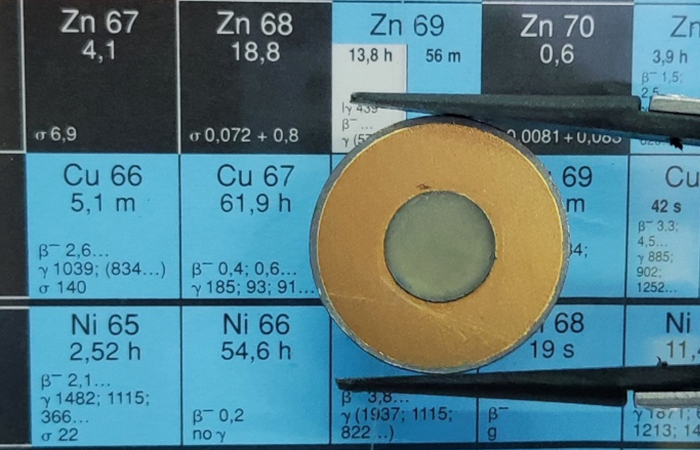
INFN technology allows the first production of copper-67 in Italy
The collaboration between the National Laboratories of Legnaro of INFN, the University of Ferrara and the IRCCS Sacro Cuore Don Calabria of Negrar (VR) has reached an important milestone for Italian nuclear medicine, opening new perspectives for the national production of teranostic radionuclides: the first production, in our country, of copper-67 (67Cu), one of the most promising radionuclides for the diagnosis and treatment of various oncological diseases.
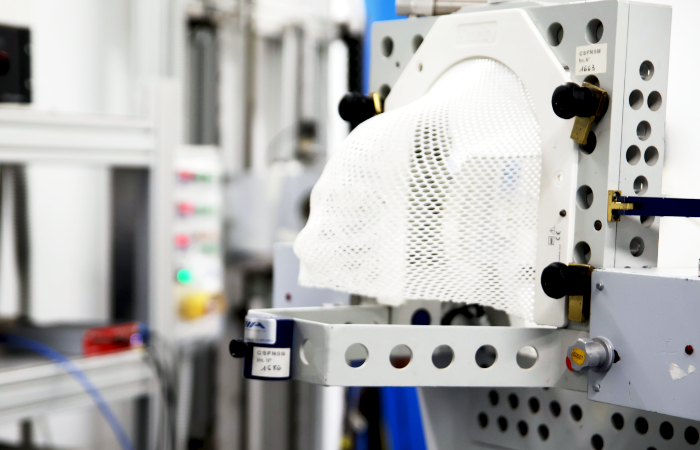
Particle accelerators at the service of society
If you think of a particle accelerator, great equipment comes to mind in laboratories dedicated to scientific research. The role of these machines in the study of basic science is certainly very important, however, they are also used for purposes closer to everyday life. Among the different applications of accelerators, the most significant are probably those related to medicine and cancer treatment.
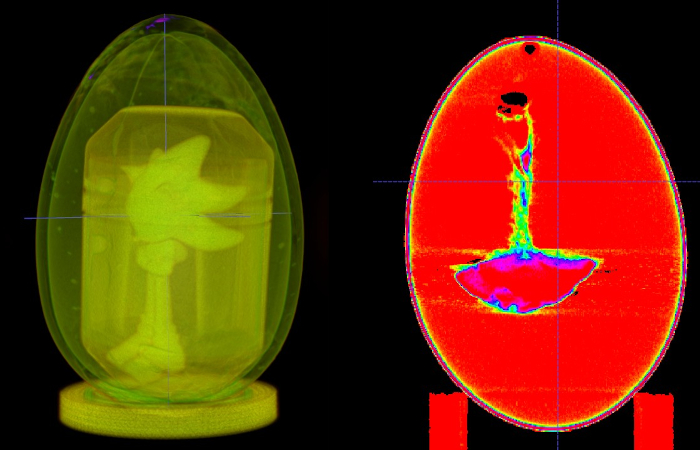
New frontiers in X-ray computed tomography for patient diagnosis and treatment
Antonio Sarno, researcher of the INFN section in Milan, works to make X-ray tomography with a conical beam more and more accurate.
Contact us
Want to collaborate with INFN?
Tell us about your need: the TT Service puts you in touch with the right people and skills for your project.
Contact us