




Technologies · Collaborations
Beyond the laboratory: synergies between INFN and industrial companies in the field of Additive Manufacturing
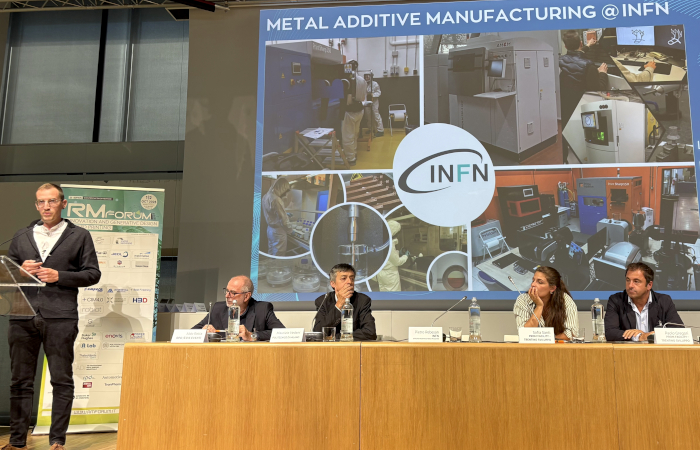
In his speech at RM Forum, Pietro Rebesan, technologist of the Padua Section, talks about INFN's activities and collaborations in metal additive manufacturing
"Proposing research activities to obtain high-performance materials and devices is our most important goal, and we want to achieve it in synergy with local industries and international realities. There is often a need for in-depth characterisation of materials and their behaviour in 3D printing, and this is where INFN can make a difference.” This is the message that Pietro Rebesan, technologist at the INFN in Padua, wanted to leave during his invited talk to theRM Forum 2025, the conference/exhibition dedicated to issues related to the development of new products or their re-engineering in a generative perspective with the help of Additive Technologies.
In this sense, the structure spread throughout the territory INFN is an advantage: in fact, there are many groups and laboratories of the Institute that deal with additive manufacturing and, although each has its own peculiarities and specialisations on different technologies or classes of materials, they can represent a point of contact for companies wishing to collaborate.
Rebesan’s intervention focused precisely on collaborations:hub HAMMER, with the two offices of the Gran Sasso and Rome National Laboratories, dedicated to advanced manufacturing technologies, material characterisation and engineering; the laboratories of the Milan and Genoa sections; the DIAM in Padua. These were born from the need to build complex parts in special materials for applications in the field of accelerators and large scientific experiments, but over time they have developed technologies and skills applicable in various fields of industry.
The case of DIAM in this context it is paradigmatic: born in 2016 as workgroup interdisciplinary for the design for additive manufacturing, the characterisation of materials, product development, quality control and validation of components produced for major scientific experiments immediately opened up to collaborations with various stakeholders, whether industrial, academic or research.’One of our main activities is the search for Additive Manufacturing solutions for nuclear fusion, in particular within the consortium. DTT (Divertor Tokamak Test facility) of which INFN is part” says Rebesan, ‘for which we have redesigned the acceleration grids and mirrors from an Additive Manufacturing perspective, simplifying them and making them more efficient.’ Interaction with industry in this project was crucial: grids; Patented by INFN (opens in a new window), they are rather large components, about one metre high, which therefore require large 3D printers that are not available in a laboratory. For this reason, the parts were made by AMCM GmbH.
Also on the front of the materials INFN’s activities are diversified. They range from the development of new generation nanocomposites based on copper and carbon nanotubes, such as the Dragoncopper, designed and patented (opens in a new window) by researchers from the Rome section and Gran Sasso National Laboratories in collaboration with La Sapienza University, to the in-depth characterisation of the properties of commercial alloys such as CuCrZr, carried out under the framework agreement with ProM – Trentino Sviluppo.
The lack of a thorough characterization of the properties of the material related to the purpose is felt especially in the case of refractory metals such as tungsten, molybdenum, tantalum and niobium. Also in this case, starting from activities related to the needs of fundamental physics, such as the development of components for the ion source of the project SPES, we have come to the development of alloys and processes specifically designed for the additive manufacturing of these metals which, precisely because of their properties, are difficult to process.
"Partnership with companies is essential, but training is even more important for us” stresses Rebesan, “and often the two aspects overlap: boys and girls who have carried out industrial doctorates worked in the laboratory and then spent a period in the company, creating a fruitful exchange of knowledge for all parties.”
Pietro Rebesan He holds a degree in mechanical engineering from the University of Padua and a doctorate in mechanical engineering from the Politecnico di Milano. Technologist at INFN, he works at the DIAM in Padua where he deals with Additive Manufacturing of refractory metals using Powder Bed Fusion – Laser Based techniques.
RM FORUM, now in its thirteenth edition, is the Conference/Exhibition dedicated to issues related to the development of new products or their re-engineering in a generative perspective with the help of integrated Additive Technologies in the production sector. It is aimed at companies working in the AM or wishing to introduce Additive Technologies into their processes and consists of a conference and an exhibition area.
News
Read also
More news from INFN Technology Transfer.
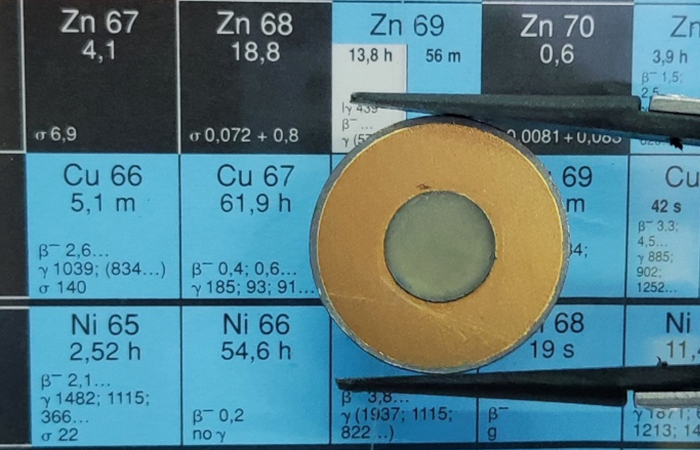
INFN technology allows the first production of copper-67 in Italy
The collaboration between the National Laboratories of Legnaro of INFN, the University of Ferrara and the IRCCS Sacro Cuore Don Calabria of Negrar (VR) has reached an important milestone for Italian nuclear medicine, opening new perspectives for the national production of teranostic radionuclides: the first production, in our country, of copper-67 (67Cu), one of the most promising radionuclides for the diagnosis and treatment of various oncological diseases.
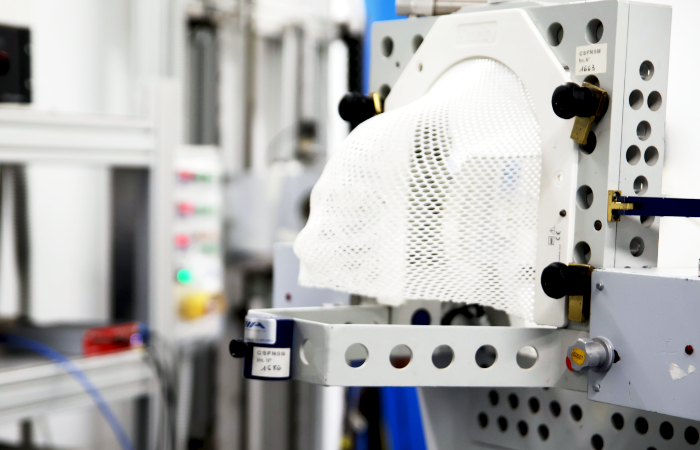
Particle accelerators at the service of society
If you think of a particle accelerator, great equipment comes to mind in laboratories dedicated to scientific research. The role of these machines in the study of basic science is certainly very important, however, they are also used for purposes closer to everyday life. Among the different applications of accelerators, the most significant are probably those related to medicine and cancer treatment.
New frontiers in X-ray computed tomography for patient diagnosis and treatment
Antonio Sarno, researcher of the INFN section in Milan, works to make X-ray tomography with a conical beam more and more accurate.
Contact us
Want to collaborate with INFN?
Tell us about your need: the TT Service puts you in touch with the right people and skills for your project.
Contact us