




Insights
G as Go-To-Market
How an invention turns into a product ready to go on the market
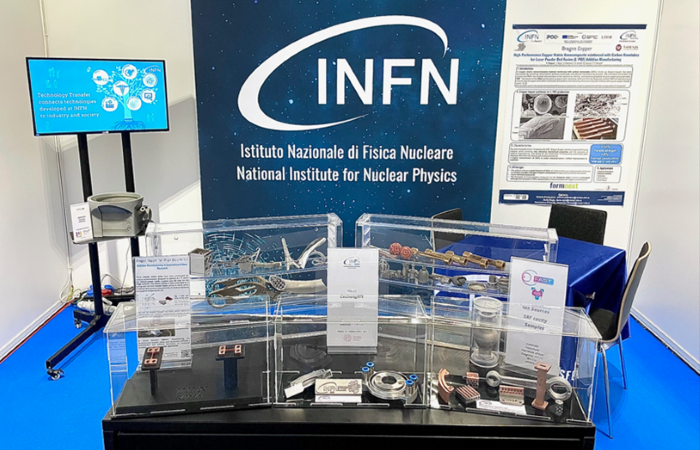
How an invention turns into a product ready to go on the market
What is Go-To-Market?
The Go-To-Market (GTM) is a strategic approach to the development of a product or service, with the aim of launching it on the market, reaching target customers and gaining a competitive advantage over the competition. From an applied research point of view, it is essential to keep in mind the needs that the new technology will respond to, improving the lives of people in their private or professional sphere.
The MTG is closely linked to the Technological Readiness Level (TRL), i.e. the degree of maturity of the developed technology. Each technology development project is ranked on a technology maturity scale and is then assigned a TRL value ranging from 1 to 9. Having passed the feasibility tests in the laboratory and reached a TRL 3, it is time to move on to the prototyping phase to demonstrate its functionality in a specific application area, developing a proof-of-concept model, which represents the starting point for the next steps.
Go-To-Market to INFN
This is where INFN’s Technology Transfer Service comes into play, which is responsible for protecting and enhancing research results, filing and managing trademarks and patents, concluding contracts with companies and other activities to enhance the technological portfolio. In addition, it provides technical support to the research community for the protection of intellectual property, business relations and the creation of spin-offs. Inspired by the principles of Open Innovation, the Institute strengthens the relationship between basic research and industry by promoting exploitation paths through concessions in licences for the use of know-how and patents.
INFN’s knowledge meets the technological needs of companies that constantly seek to expand their offer and reach new customers. In order to bridge the gap between research and the market, the INFN has been promoting calls for funding for research projects aimed at increasing the TRL of its research results since 2018. INFN staff can receive this funding, including through collaborations in which they participate with their own resources and know-how on the market, and related needs.
Identifying a new technology
INFN is an institute dedicated to fundamental physics research. However, in carrying out its mission, it often generates technological spillovers in a wide range of fields, such as the study of materials, life sciences, ICT and electronic technologies, security, protection of cultural heritage and the environment. With such a broad technology portfolio, researching and identifying the technologies that can most effectively go to market is a complex task that goes beyond just assessing TRL. Beyond technological maturity, it is important to understand whether and how technology can respond to a real market need, and whether the size of this market is sufficient to justify valorisation efforts. Another aspect to consider is the willingness of inventors / creators to undertake the path of enhancement. Any transfer of technology from the laboratory to the market, in fact, is strongly facilitated in case of active involvement of its inventor with the technology transfer structures.
Tools available: Licensing and spin-off
From a GTM perspective, INFN's Technology Transfer Service can act mainly in two directions: licensing of the technology to a company interested in marketing it, or by supporting the creation of a spin-off.
The contract of licensing is an instrument that allows the economic exploitation of the technology or intellectual property covered by the agreement, by licensing a company the right to exploit and market it, under certain conditions, for a predetermined period of time and on the basis of an agreed economic consideration. In this way, INFN does not lose ownership of the technology, product or service, protecting the interests of the institution and the researchers who worked on a given invention. Establishing a collaboration relationship also preliminary to the licensing itself, the Institute and the company both bear the risk of the research, albeit with different interests.
Businesses spin-off These are companies created from ideas or activities originating from an existing organisation, in our case INFN, with the aim of exploiting and marketing research results. INFN promotes the creation of spin-off companies by actively involving its research staff to enhance the skills and technologies developed during the experimental activities. In these companies, INFN staff are involved in various ways with the aim of finding an application of the knowledge and technologies generated by the Institute.
How INFN engages in valorisation and what the STT does
The instruments available to INFN from a MTG perspective represent a meeting point between laboratory research and the market. The STT is the office responsible for managing the relationship between scientific research and marketing, protecting its researchers, its know-how and supporting companies from a win-win perspective. Moreover, these instruments represent a mechanism to fully exploit research, creating and distributing value to the economic fabric of the country. Innovation is the meeting point between knowledge and business, where great ideas can be realised and change the world, hence the indispensable role of a strategic office such as the STT.
News
Read also
More news from INFN Technology Transfer.
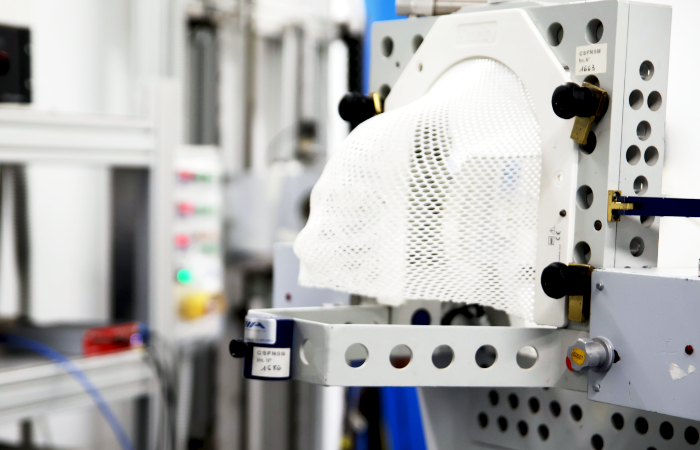
Particle accelerators at the service of society
If you think of a particle accelerator, great equipment comes to mind in laboratories dedicated to scientific research. The role of these machines in the study of basic science is certainly very important, however, they are also used for purposes closer to everyday life. Among the different applications of accelerators, the most significant are probably those related to medicine and cancer treatment.
L as Lead
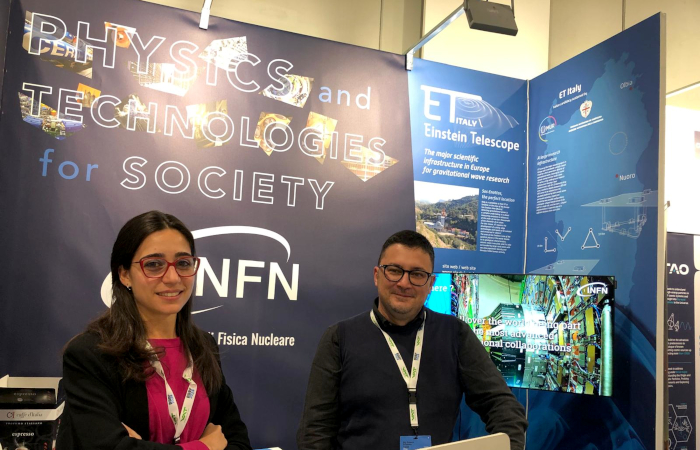
To reach the market, a technology born in the laboratory needs to be accompanied along a path that goes from identifying its application potential to valorisation, through constant monitoring and support. This is the role that the INFN Technology Transfer Service, together with the National Committee for Technology Transfer (CNTT) and the network of local representatives plays every day, that is to act as a lead, a guide, between basic physics and the productive world. Lead is a structured process that connects laboratories, researchers, companies, investors and institutions to transform skills and knowledge into concrete innovation capable of generating value for society.
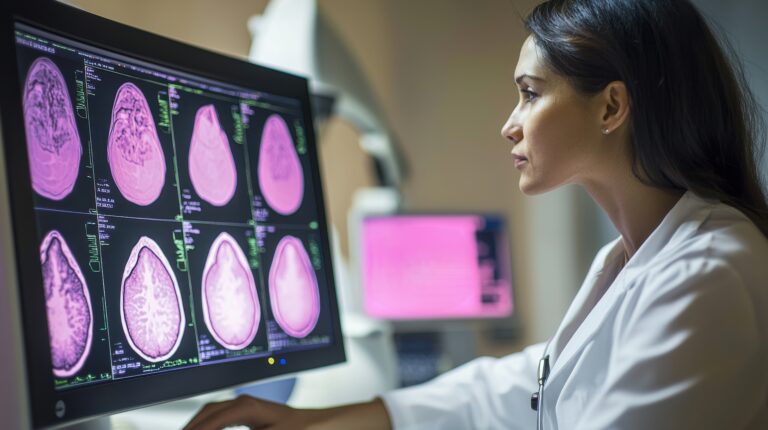
From Laboratory to Patient: The Role of INFN Technology Transfer in Life Sciences
From laboratory to patient: the role of INFN Technology Transfer in medical physics The point of view of Mariangela Cestelli Guidi, coordinator of INFN's National Committee for Technology Transfer
Contact us
Want to collaborate with INFN?
Tell us about your need: the TT Service puts you in touch with the right people and skills for your project.
Contact us