




Insights
H as High Tech
Basic scientific research increasingly requires high-level technological solutions and INFN, which has always been a reference point for basic physics, also stands as a manufacturer and supplier of cutting-edge technologies.
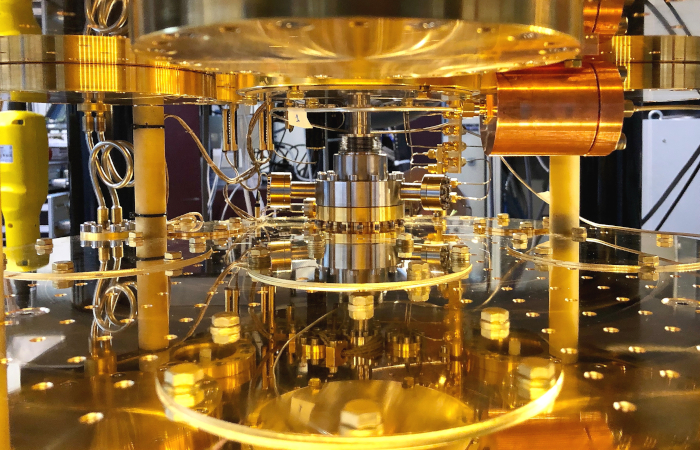
Basic scientific research increasingly requires high-level technological solutions and INFN, which has always been a reference point for basic physics, also stands as a manufacturer and supplier of cutting-edge technologies.
However, the link between INFN and high tech is not limited to pure research, but also extends to technology transfer and innovation. Often, in fact, technologies designed for fundamental physics find completely new and different applications. Typical examples are particle detectors developed for accelerators that can be used to improve the performance of medical imaging equipment; advanced algorithms for taking and analysing data that become tools for the early detection of cancers; or the technology of the accelerators themselves, which is put at the service of medicine for the treatment of tumors.
But the advanced technologies developed within the INFN can find new ways to have a positive impact on everyday life. Thus, cryogenic systems that allow to reach extremely low temperatures necessary for the operation of superconductive accelerators or for experiments on neutrino physics, are used for the Valve Testing (opens in a new window) to be installed in the hydrogen transport systems that power the rockets and means of transport of the future; or to increase the sensitivity of instruments that analyze the contamination of food and soil (opens in a new window). The techniques for surface finishing and coating with thin layers of special materials, originally designed for accelerator cavities, serve instead to develop more economical and sustainable processes for the production of industrial components, such as Rolling Rolls (opens in a new window).
The high tech generated and developed within INFN is therefore an invaluable asset that the Institute, through technology transfer, is called upon to make available to society. To do this, INFN has several tools at its disposal. The first is the stipulation of licensing agreements. Research staff, in carrying out their work, continuously generate nine pieces of knowledge that sometimes also cover new tools, processes and methods, potentially useful even outside the scope of activities in which they were born. If on the one hand this knowledge must be protected with tools such as the patenting (opens in a new window) protection of know-how, on the other hand, must also be made available and enhanced. For that reason, INFN therefore enters into licensing agreements, in which it grants its business partner the right to exploit its knowledge in a specific area and for a specific period of time.
It often happens that knowledge is developed together with another party, as a result of collaborative research agreements; This means that INFN and a company work together to develop a product of interest to both of them, which will then be used by the Institute to carry out its research activity and by the company for commercial purposes. The intellectual property generated in this case is shared between the parties, and regulated by special co-ownership agreements.
Instead, there are cases where the company itself turns to INFN because it recognises its value as a technology provider and needs specific expertise and equipment that is not available elsewhere. Technology transfer, therefore, takes place through a provision of services by INFN, or a research contract from the company which, thanks to the Institute, increases its technological level.
Moreover, INFN’s human capital should not be forgotten: people who have trained and carried out research work at INFN, who have acquired high-level skills, but also method, ability to face and solve problems, spirit of initiative and scientific curiosity and who can bring this baggage outside, into society, both by going to work in other realities and through the Creation of spin-offs leveraging INFN technologies.
News
Read also
More news from INFN Technology Transfer.
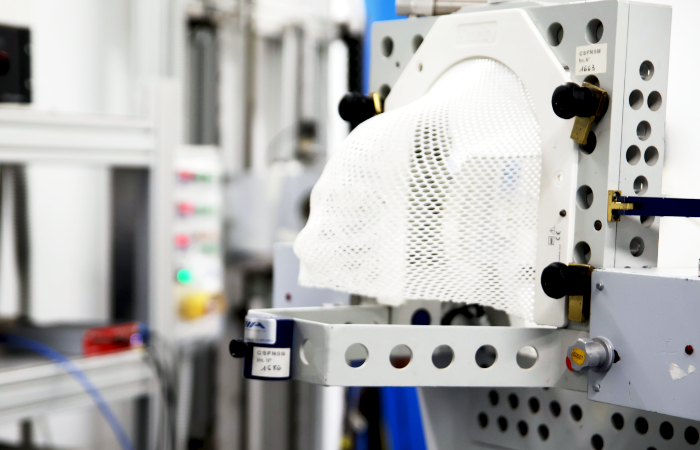
Particle accelerators at the service of society
If you think of a particle accelerator, great equipment comes to mind in laboratories dedicated to scientific research. The role of these machines in the study of basic science is certainly very important, however, they are also used for purposes closer to everyday life. Among the different applications of accelerators, the most significant are probably those related to medicine and cancer treatment.
L as Lead
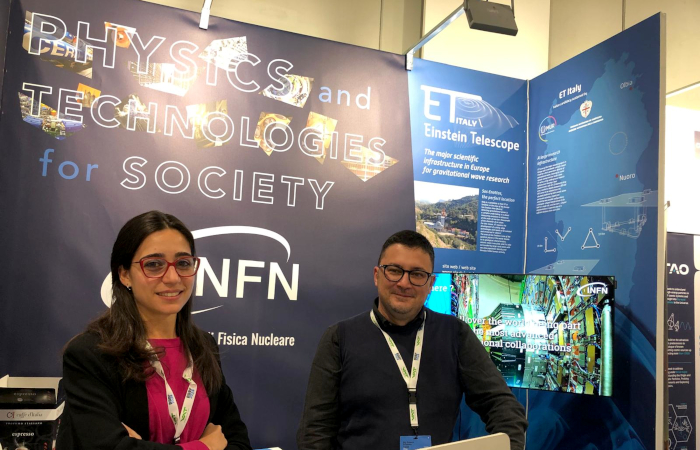
To reach the market, a technology born in the laboratory needs to be accompanied along a path that goes from identifying its application potential to valorisation, through constant monitoring and support. This is the role that the INFN Technology Transfer Service, together with the National Committee for Technology Transfer (CNTT) and the network of local representatives plays every day, that is to act as a lead, a guide, between basic physics and the productive world. Lead is a structured process that connects laboratories, researchers, companies, investors and institutions to transform skills and knowledge into concrete innovation capable of generating value for society.
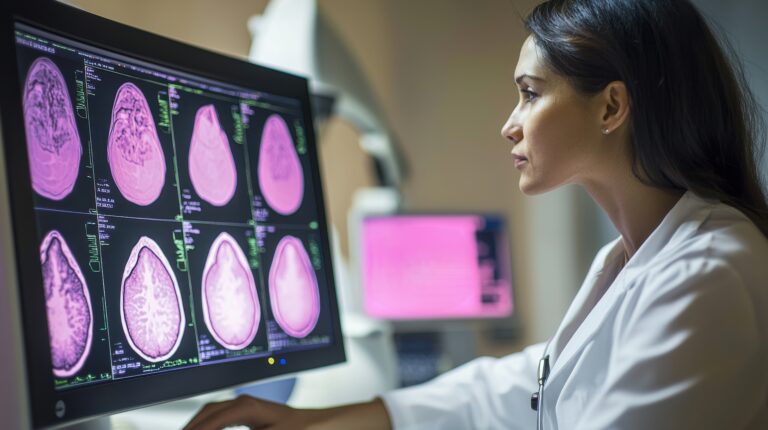
From Laboratory to Patient: The Role of INFN Technology Transfer in Life Sciences
From laboratory to patient: the role of INFN Technology Transfer in medical physics The point of view of Mariangela Cestelli Guidi, coordinator of INFN's National Committee for Technology Transfer
Contact us
Want to collaborate with INFN?
Tell us about your need: the TT Service puts you in touch with the right people and skills for your project.
Contact us