




Insights · Spin-off
Stay close to the tools: why technological proximity is the key to technology transfer to INFN
The point of view of Manuel Rollo, INFN researcher and member of the National Committee for Technology Transfer
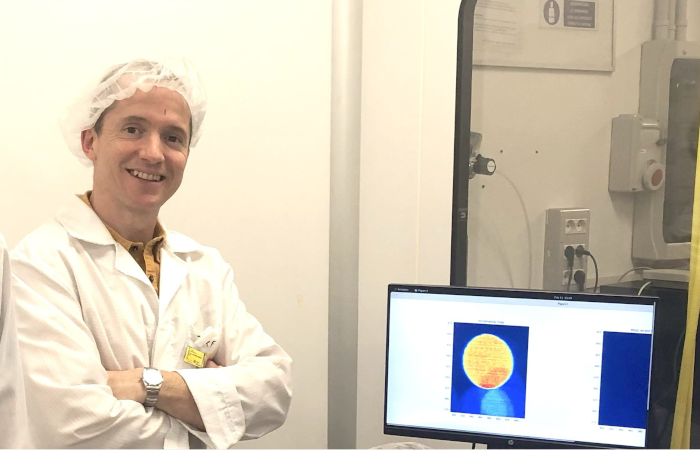
The point of view of Manuel Rollo, INFN researcher and member of the National Committee for Technology Transfer
When problems cross the boundaries of what is known, incremental innovation is not enough. create the unpublished, even without the certainty that a solution is possible. The technology that INFN develops in carrying out its primary mission of fundamental physics research is often disruptive.
At a time when rapid technological change – in particular in the field of artificial intelligence – can quickly make high-level strategies obsolete, research and development work at INFN makes it possible to stay close to the tools. This approach encourages a direct and continuous involvement with the technical aspects of our work. In my view, the organisation of research at INFN thus promotes a unique social and epistemic proximity in the European landscape. It is up to the National Committee for Technology Transfer (CNTT) to create the conditions for this invaluable tacit knowledge to Turning into innovation of high economic and social value.
The INFN community is broad and highly integrated, including engineers, technicians and administrative, theoretical and experimental physicists. Together, these figures devise, design and manufacture innovative accelerators and detectors. The work takes place in laboratories that are real Knowledge Production Spaces, in which the scalability, cost and robustness aspects of the supply and production chains are also addressed from an early stage, essential elements for the production of high-performance machines and detectors.
Looking closely at this ecosystem and working model, it is clear that INFN is one of the research institutions in Europe with the highest potential for start-up creation innovative, with a technological portfolio of excellence. Moreover, in many cases, the path to industrialisation can be seen in advance, while the research community carries out its daily work.
I therefore believe that a shift in focus is necessary: moving from a concept of technology transfer centred mainly on licensing to a vision more oriented towards business creation, in which INFN is an active part not only in the conception phase, but also in the industrialisation of technology. Much is already being done in this direction. An example is the entrepreneurial training course activated in collaboration with Cassa Depositi e Prestiti and the Graduate School of Management of the Politecnico di Milano, aimed at INFN staff. The feedback was positive: some of the eight groups that participated in the courses have already founded particularly interesting companies.
In terms of technology scouting, the CNTT has been funding projects aimed at increasing the level of technology readiness for several years.
Among these, the R4I call, now in its ninth edition in 2026, is currently being revised with the aim of actively involving companies from the early stages of projects. In addition to the concrete results, the support of the CNTT is essential to spread a culture of technology transfer within INFN, especially among younger staff, fostering a vision where basic research and practical application are not antithetical worlds, but can coexist and fertilise each other.
Combining the inventiveness of INFN staff and the technological strength of the Institute with Italian genius and entrepreneurial skill, creating new companies based on disruptive technologies and capable of responding in an innovative way to the needs of the market and society: this is my idea of technology transfer.
Manuel Rollo works at the Section of Turin, has been for years Referent for the Technological Transfer of its Section and now is part of the National Committee for the Technological Transfer
News
Read also
More news from INFN Technology Transfer.
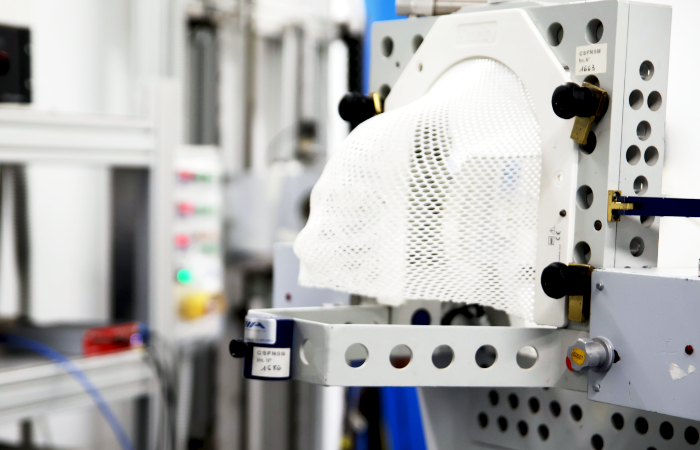
Particle accelerators at the service of society
If you think of a particle accelerator, great equipment comes to mind in laboratories dedicated to scientific research. The role of these machines in the study of basic science is certainly very important, however, they are also used for purposes closer to everyday life. Among the different applications of accelerators, the most significant are probably those related to medicine and cancer treatment.
L as Lead
To reach the market, a technology born in the laboratory needs to be accompanied along a path that goes from identifying its application potential to valorisation, through constant monitoring and support. This is the role that the INFN Technology Transfer Service, together with the National Committee for Technology Transfer (CNTT) and the network of local representatives plays every day, that is to act as a lead, a guide, between basic physics and the productive world. Lead is a structured process that connects laboratories, researchers, companies, investors and institutions to transform skills and knowledge into concrete innovation capable of generating value for society.
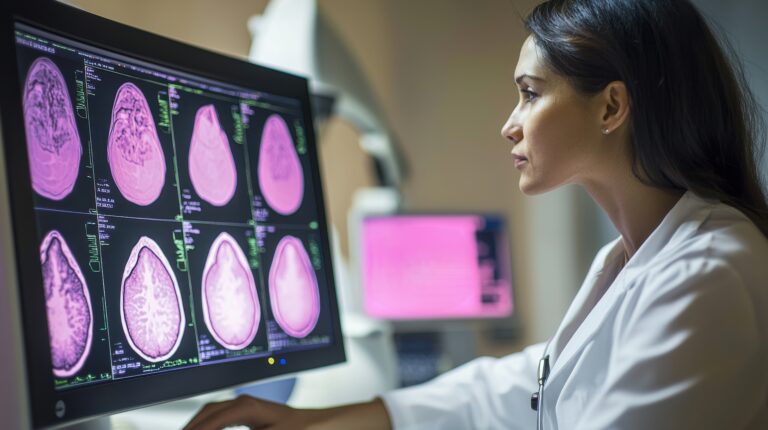
From Laboratory to Patient: The Role of INFN Technology Transfer in Life Sciences
From laboratory to patient: the role of INFN Technology Transfer in medical physics The point of view of Mariangela Cestelli Guidi, coordinator of INFN's National Committee for Technology Transfer
Contact us
Want to collaborate with INFN?
Tell us about your need: the TT Service puts you in touch with the right people and skills for your project.
Contact us