




Insights
Basic physics as an engine of technological development: the case of advanced mechanics
At the National Laboratories of Legnaro and the Padua section of INFN, the need to develop advanced technological solutions for particle accelerators has fostered the creation of knowledge and methods of processing materials with profound repercussions on the industrial fabric.
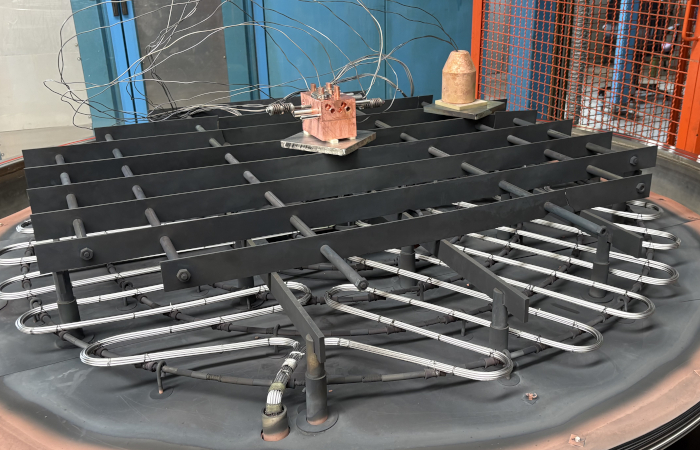
At the National Laboratories of Legnaro and the Padua section of INFN, the need to develop advanced technological solutions for particle accelerators has fostered the creation of knowledge and methods of processing materials with profound repercussions on the industrial fabric.
Vacuum brazing, advanced surface treatments and additive manufacturing are just some of the high-tech services present at INFN’s Legnaro National Laboratories and at the INFN Section in Padua. Tools and methods designed to solve the problems posed by basic research that can find practical applications also in different fields, from the mechanical industry to the life sciences, from aerospace to energy.
From basic physics to material technology
Scientific research requires complex experimental apparatus: increasingly powerful accelerators and high-performance detectors are crucial for the advancement of knowledge, but often need entirely new implementation solutions that need to be invented from scratch. The scientific work is therefore complemented by the technical work that INFN faces not only by designing and building its own tools at home, but also by developing and inventing construction and processing methods.
The technological challenge starts with materials. The heart of an accelerator consists of the cavities, suitably shaped metal ‘tubes’ to which the radiofrequency field accelerating the particle beam is applied. Building these objects with traditional metalworking techniques is a complex and expensive process, so new paths are constantly being sought.
At the Section of Padua INFN laboratory is active DIAM (opens in a new window) Developments and Innovations on Additive Manufacturing), dedicated to the technological development of the additive manufacturing of copper and high melting point metals, such as niobium, a superconducting metal that is used for accelerator cavities.
However, DIAM’s activity is not limited to accelerator components but also extends to the production of complex metal objects for various applications. The know-how matured in the additive manufacturing of high-melting metals, such as niobium and tantalum, which are typically difficult to process and therefore rarely processed by commercial workshops and 3D printing services, it can be used in advanced industrial sectors, such as aerospace or nuclear fusion, where these materials are increasingly important.
Moving from traditional manufacturing to additive manufacturing does not only require a change of instrumentation but also implies a rethinking of the way the piece is designed, in order to exploit all the advantages of the new construction technique. The skills of DIAM, therefore, go beyond the simple knowledge of process parameters but extend to all stages of processing, from design for additive in the design phase to the choice of the correct post-processing processes.
Whether it is made with traditional techniques or for additive manufacturing, an accelerator cavity requires surface finishes with very stringent specifications: very low roughness and almost total absence of defects or contamination are necessary to support the high electric fields that generate the particle beam.
Commonly used chemical and electrochemical polishing techniques work, but they are slow and use concentrated acids, the handling of which is risky for the operator and the environment. For this reason, to National Laboratories of Legnaro, on Surface Technology and Superconductivity Service (opens in a new window) improved an existing but poorly used technology, theplasma electropolishing, devising and patenting new recipes that make use of solutions with a low concentration of salts, which are safer to handle and have less impact on the environment. In this way it was possible to obtain excellent polishing results with a faster, safer and more efficient process. green.
Initially conceived for copper and niobium, these methods can also be applied to precious metals, titanium and stainless steel, paving the way for their use in the goldsmith sector and in the polishing of aesthetic or functional components.
The Surface Technology and Superconductivity Service also has extensive experience in deposition of thin coatings using PVD techniques (Physical Vapor Deposition) based on plasmas, such as sputtering,high power pulsed magnetron sputtering and cathode arc deposition. Originally used in the field of accelerators, by coupling a thin layer of superconducting niobium deposited on its inner surface to a copper cavity, these technologies have been extended to different applications and the laboratory now has the theoretical and practical knowledge to make coatings of a wide range of materials, from thick multilayer anti-wear coatings to transparent anti-reflective coatings, through functional or decorative metallic and ceramic coatings.
Vacuum and high temperatures to weld materials
The construction of an experimental apparatus often requires pieces with a complex shape, uncommon materials and couplings between materials that cannot be welded together. In these cases, recourse is made to the brazing, that is to say, a process in which the two parts are joined together by the contribution of a third material with a lower melting temperature than the pieces to be joined.
The National Laboratories of Legnaro have a special Vacuum oven built specifically for brazing. The use of an oven, instead of local heating, allows uniform heating of the entire part, so as not to generate distortions or residual stress due to thermal gradients. It is also possible to achieve high temperatures necessary for special high melting point brazing alloys.
Vacuum heating, on the other hand, ensures the absence of contamination and oxidation of the workpiece, an important condition for high-temperature brazing of parts with special uses. In this way, high quality and controllable joints are possible. The oven can also be used for a number of heat treatments on metal materials such as annealing, tempering, distension and hardening.
Advance in research by developing technology
Whether it is the improvement of something existing or the creation of completely new solutions, what distinguishes INFN is that it is not only a research body of scientific value recognised worldwide, but is also a provider of advanced technologies and a reliable partner in public-private partnerships.
Find out more
If you are interested in INFN technologies and would like more information, you can contact Technology Transfer Service
The website of the INFN Section of Padua
The website of National Laboratories of Legnaro
News
Read also
More news from INFN Technology Transfer.
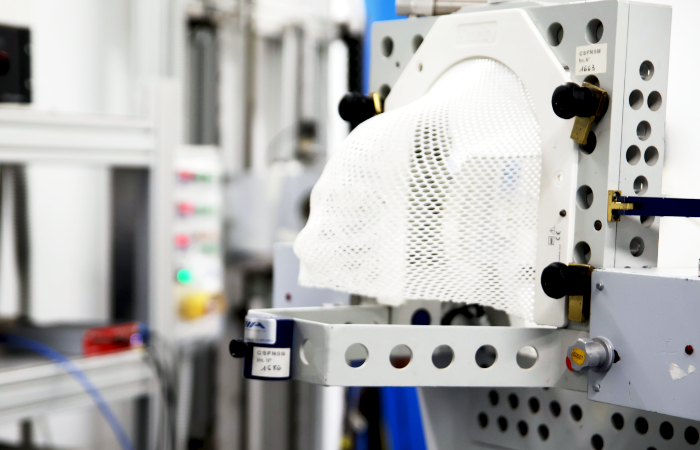
Particle accelerators at the service of society
If you think of a particle accelerator, great equipment comes to mind in laboratories dedicated to scientific research. The role of these machines in the study of basic science is certainly very important, however, they are also used for purposes closer to everyday life. Among the different applications of accelerators, the most significant are probably those related to medicine and cancer treatment.
L as Lead
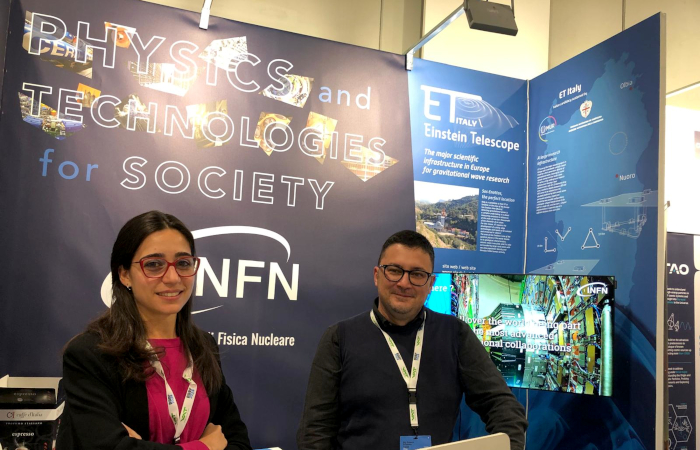
To reach the market, a technology born in the laboratory needs to be accompanied along a path that goes from identifying its application potential to valorisation, through constant monitoring and support. This is the role that the INFN Technology Transfer Service, together with the National Committee for Technology Transfer (CNTT) and the network of local representatives plays every day, that is to act as a lead, a guide, between basic physics and the productive world. Lead is a structured process that connects laboratories, researchers, companies, investors and institutions to transform skills and knowledge into concrete innovation capable of generating value for society.
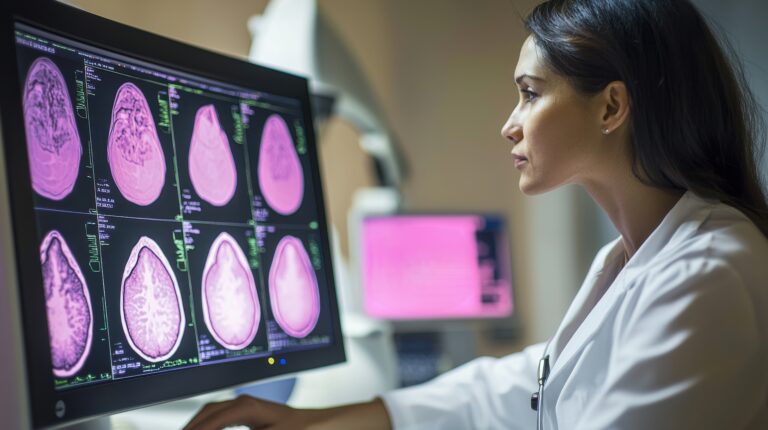
From Laboratory to Patient: The Role of INFN Technology Transfer in Life Sciences
From laboratory to patient: the role of INFN Technology Transfer in medical physics The point of view of Mariangela Cestelli Guidi, coordinator of INFN's National Committee for Technology Transfer
Contact us
Want to collaborate with INFN?
Tell us about your need: the TT Service puts you in touch with the right people and skills for your project.
Contact us