




Insights
K as Know-How
When you think about how to protect industrial property that comes from a new technology, the first tool that comes to mind is the filing of a patent application. However, sometimes there are results that for legal, technical or expediency reasons may not be patented but, not for this reason, otherwise protected. In these cases you can resort to the trade secret, also commonly called know-how. Unlike patents, where the details of the invention are made public, know-how has value as long as the information is kept secret.
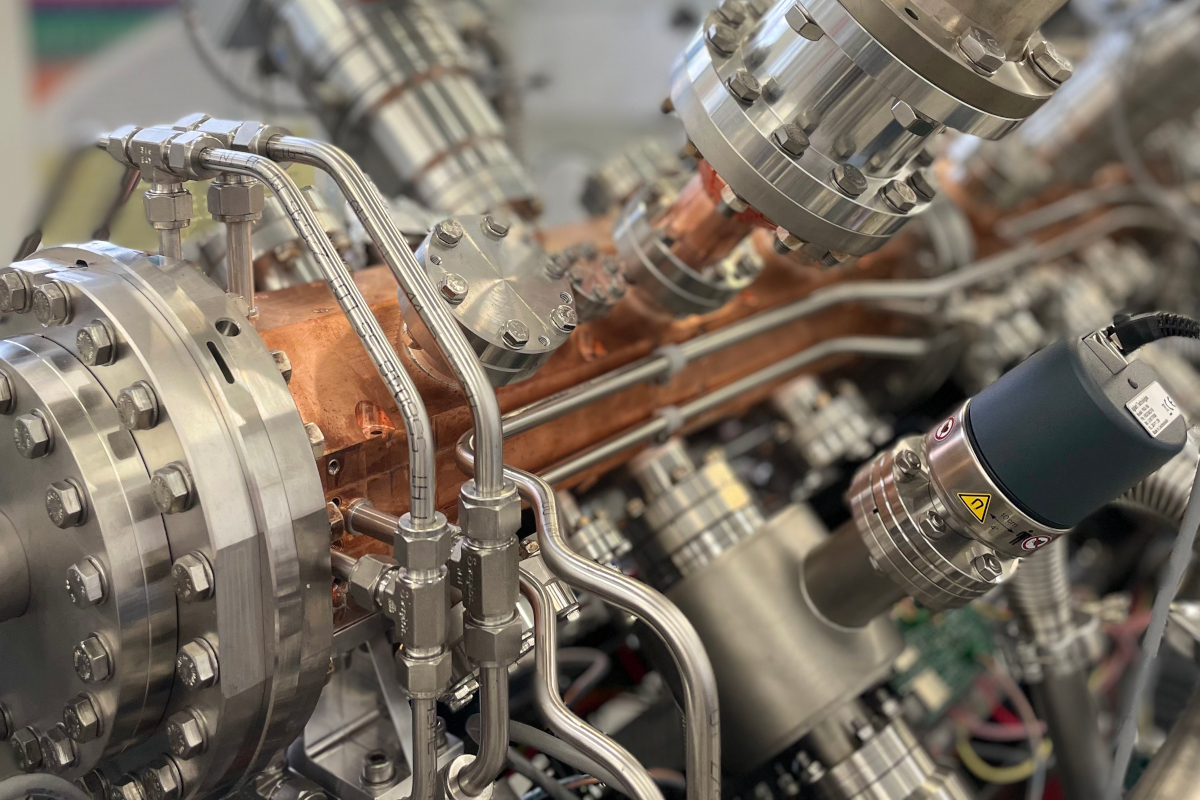
What is know-how
When you think about how to protect industrial property that comes from a new technology, the first tool that comes to mind is the filing of a patent application. However, sometimes there are results that for legal, technical or expediency reasons may not be patented but, not for this reason, otherwise protected.
In these cases, recourse may be had to trade secret, also commonly called know-how. Unlike patents, where the details of the invention are made public, know-how has value as long as the information is kept secret.
Italian law (Article 98 of the CPI) treats information as trade secrets:
- That they are secret
- Which have economic value because they are secret
- Whose owners shall take all appropriate measures to keep them secret.
Differences Between Patents and Trade Secrets
| Patent | Trade secret |
| Requires registration and is subject to examination by competent offices | Does not require formal registration |
| Requires payment of fees to keep it | There are no maintenance fees |
| Details of the invention are made public and other forms of publication are not precluded | Information must be kept secret |
| Maximum duration of 20 years | Potentially unlimited duration (as long as secrecy is maintained and/or information offers a competitive advantage) |
| Strong legal protection | Weaker legal protection |
When to resort to trade secrets
The choice to protect your idea or invention by keeping the details secret may be motivated by legal, technical or expediency reasons.
- From the point of view legal, there are limitations to what the Industrial Property Code considers patentable and defines as invention. For example, discoveries, theories, plans, principles, methods, programs and presentations of information considered as such They are not considered inventions and therefore cannot be patented. The way to protect them is therefore necessarily to keep them confidential.
- On the side technical however, some inventions are easily copied and at the same time it is difficult to provePatent Infringement; as in the case, for example, of processes for the realization of an object or for obtaining a result. The patenting of a process requires its description in such detail as to give the possibility to replicate it. These details are then made public and it is difficult to demonstrate, without an inspection of the production lines, that a potential competitor has used the patented process and not an alternative process that achieves the same effect.
- There are also reasons for opportunity, essentially economic: filing and maintaining a patent application has a cost, which can become high if the patent is extended in several countries, and there is no guarantee of its actual grant, which in any case comes several years after the filing of the application.
If the new technology falls within the cases described, it is therefore convenient (and often the only way) to protect your intellectual property while keeping it as confidential as possible. However, we must not fall into the error of considering trade secrets as a cost-free alternative to patents: the law protects those who possess know-how only when take all reasonably appropriate measures to protect its secrecy, and this requires investment in personnel, facilities and money. Moreover, what the Know How protects is the sphere of secrecy and not its content: anyone who were to achieve the same result independently would have nothing to do with the trade secret holder. The latter therefore lapses when the third party publishes it, since the requirement of secrecy no longer applies.
Trade secret in research organisations
At first sight, the maintenance of trade secrets would appear to be contrary to the principles of open science which animate research institutions and which the INFN has explicitly adopted. Sometimes, however, it is necessary that some observations are kept confidential because they guarantee a competitive advantage make possible investments in technological development by companies interested in technology, which otherwise would have no reason to be made.
In these cases, therefore, the indication as open as possible, as closed as necessary established by the European Union, so that the results of the research and the data obtained are made public, avoiding disclosing details of the method or process/product used to obtain them that are interesting for the business activity of the partner company. As the name implies, in know-how the how Some results have been achieved, not the what has been achieved.
How INFN promotes and protects know-how
The advancement of knowledge in basic physics very often requires the development of ad hoc hardware and software solutions, created to solve problems that cannot be addressed with existing technologies. This technological heritage, of which INFN is very rich, also has derived applications, the second use This is discussed in the Technology Transfer, which is of great interest to industry and society. Examples of this are plasma systems used for dose monitoring in industrial sterilisation plants, or secure clouds for biomedical data, which derive from experience in managing data flows from particle physics experiments.
The technology created for research, however, is not ready for the market, it requires additional development that goes beyond the typical work of the researcher. For this reason, INFN Technology Transfer supports and promotes technological development programs aimed at making its know-how more attractive to the market.
In its nine editions, the R4I call financed 38 projects aimed at increasing technology readiness, with a total allocated value of over EUR 1 million, helping to enhance INFN’s know-how through licensing agreements with companies, encouraging the creation of spin-offs and spreading the culture of technology transfer within INFN.
Building on this successful experience, from the 2027 edition, R4I will become INFN Connect, transforming itself to be more effective in its intentions. The internal technological scouting will be enhanced, giving the possibility to a greater number of projects to obtain a first loan and, at the same time, it will strengthen the connection with companies, with the aim of making the transfer of know-how from the world of research to the industrial reality easier and more profitable.
News
Read also
More news from INFN Technology Transfer.
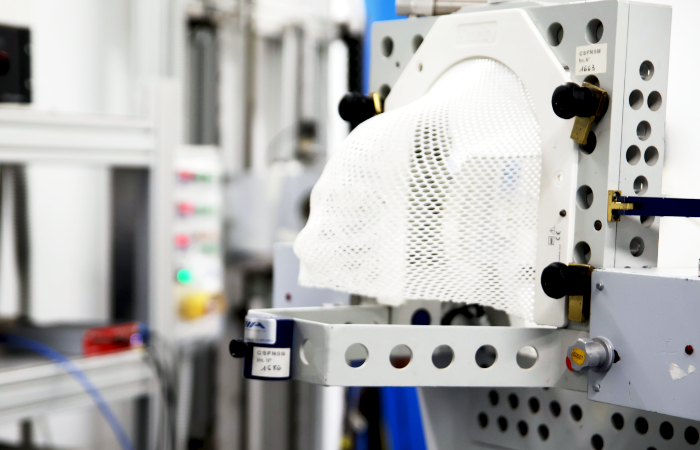
Particle accelerators at the service of society
If you think of a particle accelerator, great equipment comes to mind in laboratories dedicated to scientific research. The role of these machines in the study of basic science is certainly very important, however, they are also used for purposes closer to everyday life. Among the different applications of accelerators, the most significant are probably those related to medicine and cancer treatment.
L as Lead
To reach the market, a technology born in the laboratory needs to be accompanied along a path that goes from identifying its application potential to valorisation, through constant monitoring and support. This is the role that the INFN Technology Transfer Service, together with the National Committee for Technology Transfer (CNTT) and the network of local representatives plays every day, that is to act as a lead, a guide, between basic physics and the productive world. Lead is a structured process that connects laboratories, researchers, companies, investors and institutions to transform skills and knowledge into concrete innovation capable of generating value for society.
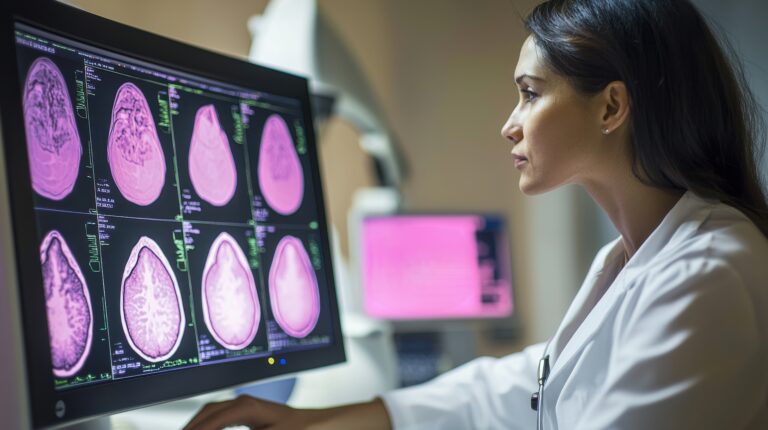
From Laboratory to Patient: The Role of INFN Technology Transfer in Life Sciences
From laboratory to patient: the role of INFN Technology Transfer in medical physics The point of view of Mariangela Cestelli Guidi, coordinator of INFN's National Committee for Technology Transfer
Contact us
Want to collaborate with INFN?
Tell us about your need: the TT Service puts you in touch with the right people and skills for your project.
Contact us