




Insights · Events
From Laboratory to Patient: The Role of INFN Technology Transfer in Life Sciences
From laboratory to patient: the role of INFN Technology Transfer in medical physics The point of view of Mariangela Cestelli Guidi, coordinator of INFN's National Committee for Technology Transfer
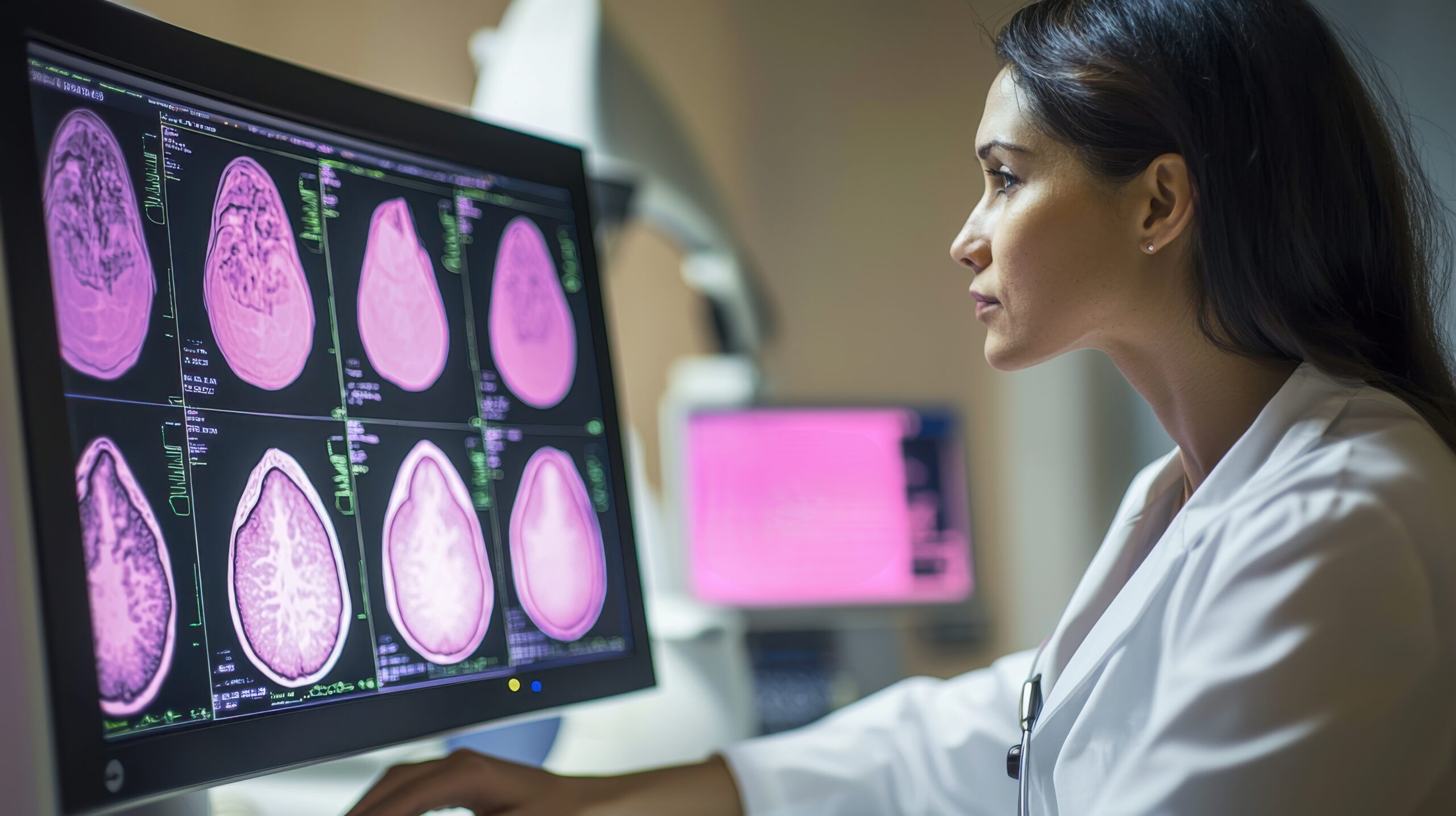
The point of view of Mariangela Cestelli Guidi, coordinator of the National Committee for Technology Transfer of INFN
INFN and the life sciences
INFN is institutionally engaged in the transfer of its scientific knowledge to the world of Life Sciences. Research carried out at the frontier of basic physics continues to generate knowledge, tools and infrastructures that are of great relevance in the field of medicine, biology, pharmacology and the omics sciences in general.
Through the network INFN for Life Sciences (INFN4LS), the Institute coordinates various lines of research in the field of life sciences, ranging from diagnostics through advanced imaging to innovative therapies, such as BNCT, hadrontherapy and the production of radionuclides for medical applications, patient-based dosimetry and healthcare professionals, and the use of high-performance computing and AI for precision and personalised medicine.
Many breakthroughs and technological solutions, however, fail to reach their patient application because they face a number of market entry challenges.
From the lab to the patient
‘From Ugo Amaldi’s report to the first patient treated at the National Cancer Hadron Therapy Centre (CNAO) 20 years have passed" begins the intervention of Mariangela Cestelli Guidi to the XXII SIRR National Conference, which was held at the Frascati National Laboratories from 15 to 18 June 2026. This statement is not a criticism of the slow pace of the process but, on the contrary, a statement of esteem for the tenacity and ability of those who have managed to turn a laboratory idea into a functioning structure capable of treating hundreds of patients per year.
“INFN has the capacity to develop a technology up to a Technology Readiness Level (TRL) of 4-6, i.e. up to proof of concept” continues Cestelli Guidi, “the next development should be carried out by the company, and this is where many technologies stop.
The interval between TRL 5 and 7 is what is defined ‘Valley of Death’ This is the critical phase in which a technology, despite having passed the initial research and development phase. At this stage, innovative ideas risk being ‘blocked’ because:
- Lack of financial resources to scale production or validate the market.
- There are no strategic partnerships with companies or investors willing to take risks.
- Management skills necessary to bring the technology to market are lacking.
- Regulations or market requirements They are not yet fully satisfied.
The case of life science technologies is then made even more complicated by the legislation on medical devices which, especially in Europe, has become more stringent and complex. The need to comply with regulations, in fact, requires investments in terms of time, advice and research and development often underestimated by those who develop a new technology.
What does the TT INFN do
"In order to start a relationship with a company interested in our technologies, it is first necessary to understand each other", says Mariangela, "the language of industry and the market is different from that of research, and for this reason we are investing a lot in training in the field of technology transfer, for research staff, for administrative staff and for those who are considering setting up a spin-off.”
In fact, the INFN Technological Transfer periodically organises courses for the staff of the institute, which deal with the protection of intellectual property, the protection of confidential information and how to interact with companies. Recently, thanks to a partnership with Cassa Depositi e Prestiti, the National Committee for Technology Transfer has launched a course dedicated to those who, among the Institute’s staff, intend to found a start-up that will then be recognised as INFN spin-off peaks. This is a real support for entrepreneurship, which provides the transversal skills and tools necessary for those who decide to "take the leap" and propose themselves as entrepreneurs.
One of the beneficiaries of this path was Francesco Collamati, researcher at the INFN Section in Rome and co-founder of Radiantis Research, a spin-off of INFN that deals with radioguided surgery and is currently completing the pre-production batch of its first probe for oncology surgery, Beta Probe I.
But there is not only training: the Technology Transfer Service deals above all with everything related to intellectual property and relations with companies: it provides technical support and advice to staff wishing to file a patent, protect intellectual property and co-develop products or provide services to third parties, without forgetting the fundamental activity of finding industrial or commercial partners.
A growing structure
“The culture of technology transfer is relatively recent in the INFN, as are the dedicated offices”, recalls Cestelli Guidi, “in recent years we have grown a lot, both in terms of staff and capacity, but there is still a lot to do.”
To make our life sciences TT activities more effective, it is crucial to strengthen interaction with organisations such as the Italian Society for Radiation Research and the Italian Association of Medical Physics, who know the needs and demands of the users of the technologies we develop. It is also important for INFN to make itself known and recognised, for example by participating in industry events such as the Meet In Italy For Life Science It will take place in Rome on 13-14 October 2026 and is co-organised by INFN.
An aspect on which interventions are needed is the regulatory one: as highlighted by Mariangela Cestelli Guidi and confirmed by Francesco Collamati, investments in consultancy and additional research and development to comply with the regulation are, in the case of medical devices, huge and very often underestimated by those who undertake a research project that aims at application results. There is therefore an increasing need to have a reference within the INFN that can guide and guide, also making use of external consultants who, in order to bring the fruits of their research to the patient’s use, need to deal with the certification process of a device or, more simply, want to be aware of what is necessary to do so.
Find out more
For more information on INFN's life science activities, you can contact the Technology Transfer Service.
News
Read also
More news from INFN Technology Transfer.
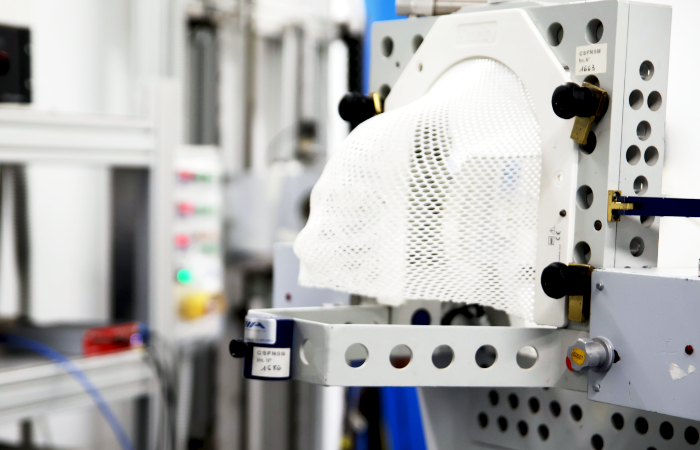
Particle accelerators at the service of society
If you think of a particle accelerator, great equipment comes to mind in laboratories dedicated to scientific research. The role of these machines in the study of basic science is certainly very important, however, they are also used for purposes closer to everyday life. Among the different applications of accelerators, the most significant are probably those related to medicine and cancer treatment.
L as Lead
To reach the market, a technology born in the laboratory needs to be accompanied along a path that goes from identifying its application potential to valorisation, through constant monitoring and support. This is the role that the INFN Technology Transfer Service, together with the National Committee for Technology Transfer (CNTT) and the network of local representatives plays every day, that is to act as a lead, a guide, between basic physics and the productive world. Lead is a structured process that connects laboratories, researchers, companies, investors and institutions to transform skills and knowledge into concrete innovation capable of generating value for society.
K as Know-How
When you think about how to protect industrial property that comes from a new technology, the first tool that comes to mind is the filing of a patent application. However, sometimes there are results that for legal, technical or expediency reasons may not be patented but, not for this reason, otherwise protected. In these cases you can resort to the trade secret, also commonly called know-how. Unlike patents, where the details of the invention are made public, know-how has value as long as the information is kept secret.
Contact us
Want to collaborate with INFN?
Tell us about your need: the TT Service puts you in touch with the right people and skills for your project.
Contact us