




Events
"Nuclear for Health" conference: the dialogue between science, business and tomorrow's health institutions
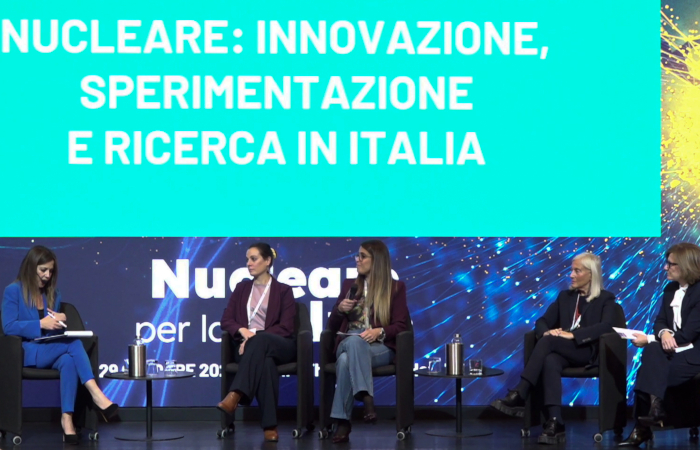
Liliana Mou, a technologist at the National Laboratories of Legnaro, reiterates the INFN’s role as an international leader in research on radioisotopes for medical applications.
During the conference “Nuclear for Health,’ which took place in Bari on 29 October, the theme that clearly emerged was the need for close and fruitful collaboration between research, business, health facilities and institutions. Liliana Mou, a technologist and head of the radioisotope service for applied medicine at the Laboratori Nazionali di Legnaro (LNL), spoke on the panel on radiopharmaceuticals and nuclear medicine, highlighting the leading role played by the INFN in this field.
‘The first step in the creation of a radiopharmaceutical is the production of the radioisotope, i.e. the element that emits radiation’, says Mou, ‘and it is precisely in this fundamental step that the INFN contributes, thanks to the project SPES (Selective Production of Exotic Species), which aims to create a unique structure for both basic research in nuclear science and research applied to the production of radioisotopes for medical purposes.”
The heart of SPES, a high-powered cyclotron that accelerates protons up to 70 MeV at very high intensities, reaching 700 μA, represents a unique opportunity for INFN and Italy to become world leaders in this field. Currently, only 5 accelerators of this type are installed worldwide, of which only one is present in Europe, in Nantes in France.
Currently, nuclear medicine focuses heavily on the development of theranostics, i.e. the combined use of a single radionuclide or a radiopharmaceutical marked with a pair of radionuclides, with which both diagnostic and therapeutic procedures can be performed. The main advantage of theranostic radiopharmaceuticals is the possibility of selecting patients with a high probability of responding positively to the specific treatment, thus avoiding the administration of unnecessary drugs.
The two lines of research active in LNL, i.e. direct activation and the ISOL technique, will enable laboratories to produce a wide range of radioisotopes, both for theranostics and purely therapeutics.
The method of direct activation consists of irradiating with proton beams a dedicated target, the implementation of which is specifically optimised to produce the medical radionuclide of interest, which after bombardment must undergo a radiochemical process to extract and purify the medically relevant radioisotope from all irradiated material.
In the technique ISOL, on the other hand, the proton beam affects a thick target of uranium carbide (UCx), generating a set of fission fragments, most of which are then released from the target thanks to high working temperatures, generally above 2000 °C. The released nuclei are transformed into positive ions and are extracted into a particle beam. A mass separator allows the desired isotope to be selected and collected.
Two examples are only the copper-67 and the scandium-47, whose production methods from targets irradiated with a cyclotron are covered by as many INFN patents.
In answering the question of what are the future challenges in the field of nuclear medicine, Liliana Mou mentioned the need for a Effective transition from research to clinical applications, highlighting the steps that INFN is taking in this regard. With the support of the Technology Transfer structures, work is in fact being carried out on the enhancement of the patents mentioned above, and activities are being carried out to establish and strengthen relations between the Institute and clinical and business realities.
In addition to exploiting the results of the research carried out, INFN’s aim is to broaden its fields of intervention by equipping itself with several laboratories dedicated to R&D for the entire production process of emerging radionuclides, including a laboratory for the production of targets and a laboratory dedicated to the radiochemical processing of irradiated material. In addition, within the LNL there is the LARIM laboratory, which is part of the University of Padua and in scientific collaboration with the Veneto Oncology Institute, recently authorised to operate and equipped with all the necessary equipment to carry out preclinical studies, testing new radiopharmaceuticals on small animals. When fully operational, LNL will become a unique structure, where it will be possible not only to produce emerging radionuclides but also to test various radiopharmaceuticals. in-vitro and in-vivo.
With the intention of going beyond preclinical, work is also underway on the design of a facility dedicated to the massive production of radionuclides, using thick targets and high current intensities, again for research purposes. Through agreements with companies, the same facility could also be used for the production of isotopes already approved by regulatory bodies, both diagnostic and therapeutic, arriving at that strategic dialogue between science, business and institutions repeatedly invoked during the conference.
Find out more
The project SPES (opens in a new window)
Project LARAMED (opens in a new window) on the production of radionuclides by direct activation
Project ISOLPHARM (opens in a new window) on the production of ISOL radionuclides
News
Read also
More news from INFN Technology Transfer.
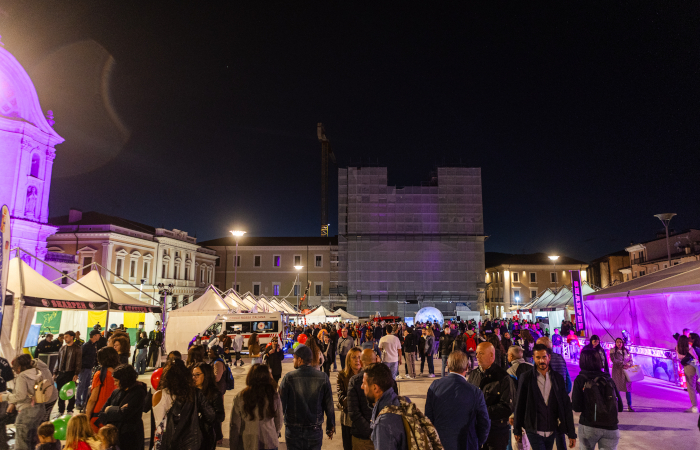
SHARPER 2026: In L’Aquila, the European Researchers’ Night is enriched by a space dedicated to INFN technology transfer
Thanks to the OPEN.INFN2 project, the 2026 edition, presented at Palazzo Margherita, will host a space dedicated to technology transfer and dialogue with businesses, schools and citizens Science leaves the laboratories and meets the city: this is the spirit of SHARPER – European Researchers’ Night, which returns to L’Aquila on Friday 25 September 2026 with a day full of events, experiences and opportunities for discussion dedicated to citizens of all ages. The event, supported by Fondi Restart – Sviluppo delle Potenti culturali del Comune dell’Aquila (Restart Funds – Development of the cultural potential of the Municipality of L’Aquila), is part of L’Aquila’s 2026 Italian Capital of Culture programme, supported and promoted by the Municipality of L’Aquila.
From Laboratory to Patient: The Role of INFN Technology Transfer in Life Sciences
From laboratory to patient: the role of INFN Technology Transfer in medical physics The point of view of Mariangela Cestelli Guidi, coordinator of INFN's National Committee for Technology Transfer
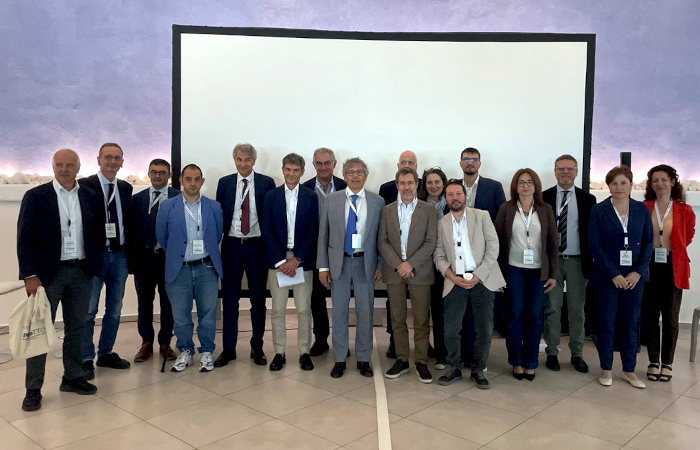
INFN at the ‘PerfeTTO meets Puglia’ event
On 11 and 12 June, the PerfeTTO meets Puglia event was held in Monopoli, where research bodies, universities, institutions and companies launched a debate to strengthen the ecosystem of innovation and technology transfer in the Life Sciences.
Contact us
Want to collaborate with INFN?
Tell us about your need: the TT Service puts you in touch with the right people and skills for your project.
Contact us