





Benefits
Why choose this technology
The strengths of this technology.
High margin of safety.
Higher critical currents.
Possibility to produce longer tapes.
Simple and automatable process.
Technology
How it works
For large-scale technological applications, superconducting materials are commonly produced in the form of wires or tapes, which can be used individually or assembled into multi-wire or multi-layer conductors. Among these materials, REBCO (copper oxide, barium and rare earths) is establishing itself as one of the most promising solutions due to its excellent superconductive properties.
This invention is part of this context, which concerns the creation of junctions for superconducting conductors, with particular reference to REBCO-based materials.
REBCO superconductors are commonly made in the form of flexible tapes, known as coated conductors, consisting of a superconducting layer deposited on a flexible substrate, typically a metal tape or polymer film. The superconducting layer is generally a thin film made from rare earth materials. The deposition of the superconducting material on the substrate takes place using high-precision techniques, including pulsed laser deposition, sputtering or physical vapour deposition, and chemical vapour deposition. These processes allow accurate control of the thickness, composition and structural properties of the superconducting film, ensuring high functional performance.
Making superconducting devices on an industrial scale, such as magnets or cables, requires REBCO tapes of considerable length. However, direct production of very long individual tapes is complex and expensive. For this reason, it is essential to have reliable joining techniques, able to guarantee electrical continuity, mechanical integrity and thermal stability of the overall system.
The invention covered by this patent concerns an innovative method of joining superconducting tapes, which represents an improvement of the technique known as ‘bridge’. This method makes it possible to obtain joints with a high safety margin — preferably greater than 20% — and from a critical current carrying capacity higher than that of the original individual tapes, thus contributing to improving the overall performance of the superconducting devices.

Are you interested in this technology?
Ask us for availability, license terms or more detailed technical material. The TT Service answers you.
Applications
Where this technology is applied
The areas in which this technology offers the greatest advantage.
Superconducting magnets
Medical imaging
Production of long superconducting tapes
Explore
Other technologies in Energy technologies

- Energy technologies
Coaxial connector for thermal optimisation of electrical connections in cryogenic systems
The technology refers to the field of electrical connectors, in particular to a coaxial connector for the thermal optimization of electrical connections in...
- Energy technologies
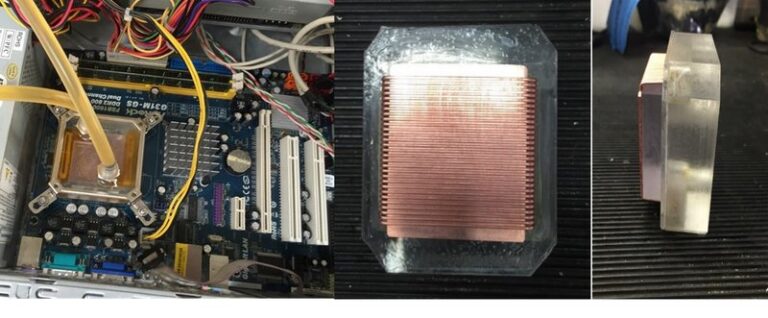
MICROCANAL HEAT DISSIPATION SYSTEM
The microchannel technology, applied to heat dissipation systems, allows both the use of high refrigerant fluid pressures, improving the...

- Energy technologies
Multi-layer device of high-temperature superconducting material (HTS) tapes
The invention refers to a method of making a multi-layered device of high-performance superconducting material belts.

Contact us
Can this technology help your business?
Tell us about your project: the TT Service puts you in touch with the researchers who have developed the technology and evaluates with you the most suitable form of collaboration.
Contact the TT Service