




Insights
J as joint development
Co-development (joint development) is one of the ways in which the National Institute of Nuclear Physics can interact with companies to make use of their skills and technologies.

The co-development Joint development is one of the ways in which the National Institute of Nuclear Physics can interact with companies to make use of their skills and technologies.
What is co-development
The necessary condition for a project to be considered co-development is that at least two organizations contribute in a balanced way to the activities, using their own resources of personnel and equipment, to achieve something new, which can be a device, a process or, more generally, a technology.
There may be co-development within a canonical research project as well as within a contract. What matters is that for the achievement of the result it is required to put in place complementary skills and resources of all partners.
Examples of co-development
In the reality of technology transfer, the typical cases of co-development are those in which a technology generated within the Institute, and possibly tested and validated in the laboratory, needs additional work to increase its Technology Readiness Level (TRL) and therefore be used in areas other than research. The achievement of high TRLs and the subsequent placing on the market of a new technology are beyond INFN’s reach, so it is necessary to involve a company that, working together with research staff, is actively engaged in taking the necessary steps to transform the technology into a product.
In co-development, then, INFN and company work together for a common objective, which is the object of the activity, but with different purposes. For INFN, the aim is to develop its own technologies, especially for research purposes, while the company is interested in including that technology in the portfolio of products and services it provides or using it to improve its processes.
Each co-development project has its own story and can be created at the initiative of INFN as well as the company. Very often, for the upgrading of the research infrastructure, the Institute needs technologies that are not commercially available: there are no companies able to respond to that request and any supply must be preceded by a co-development work in which the desired product is designed together.
A similar, albeit opposite, scenario occurs when the company turns to the INFN to solve an enabling technological challenge for new products, which the Institute may or may not benefit from, again for its experimental research activity.
Intellectual property in co-development
Before starting a co-development project it is good to regulate the access rights that are expected on the result. What does the company want to do with it? What rights should be granted to the public research organisation?
Whatever the distribution of ownership shares, it is essential that the Institute is guaranteed the possibility of use the results of co-development free of charge and without time limits for research and teaching purposes. On the other hand, the company wants to have as much freedom of action as possible for its production and sales strategies, usually with a paternity and/or economic recognition to the research partner.
A co-development project can be regulated with specific agreements that, as a preliminary step, regulate operational and legal aspects to avoid ongoing conflicts. The Technology Transfer Service is in charge of preparing these agreements and can be contacted for any clarifications (tto@lists.infn.it)
TT INFN measures to support co-development
In order to promote the transfer of knowledge and the market outlet of technologies with the contribution of INFN, the National Committee for Technology Transfer has launched INFN CONNECT, the new initiative to finance technology development projects in cooperation with companies. The measure replaces the previous Research For Innovation (R4I), focusing more on the direct involvement of companies from the early stages of the project. The initiative is divided into two phases: in the first phase it will be possible for the Institute’s staff to submit proposals while, in the second phase, expressions of interest in specific technological developments will be acquired by companies. Combining the needs and interests of INFN and companies will fund co-development projects to bring research results to the market for the benefit of society.
For more information about INFN CONNECT
you can read the news of the launch here
or consult the dedicated page the INFN TT website
News
Read also
More news from INFN Technology Transfer.
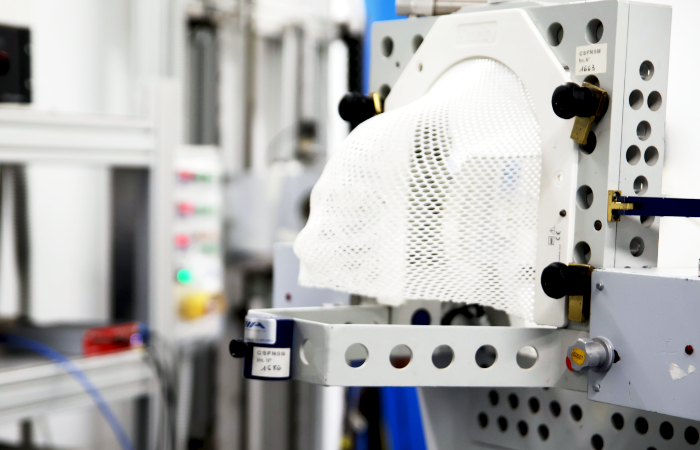
Particle accelerators at the service of society
If you think of a particle accelerator, great equipment comes to mind in laboratories dedicated to scientific research. The role of these machines in the study of basic science is certainly very important, however, they are also used for purposes closer to everyday life. Among the different applications of accelerators, the most significant are probably those related to medicine and cancer treatment.
L as Lead
To reach the market, a technology born in the laboratory needs to be accompanied along a path that goes from identifying its application potential to valorisation, through constant monitoring and support. This is the role that the INFN Technology Transfer Service, together with the National Committee for Technology Transfer (CNTT) and the network of local representatives plays every day, that is to act as a lead, a guide, between basic physics and the productive world. Lead is a structured process that connects laboratories, researchers, companies, investors and institutions to transform skills and knowledge into concrete innovation capable of generating value for society.
From Laboratory to Patient: The Role of INFN Technology Transfer in Life Sciences
From laboratory to patient: the role of INFN Technology Transfer in medical physics The point of view of Mariangela Cestelli Guidi, coordinator of INFN's National Committee for Technology Transfer
Contact us
Want to collaborate with INFN?
Tell us about your need: the TT Service puts you in touch with the right people and skills for your project.
Contact us