




Insights
D as Copyright
Articles, software, graphics, images: scientific production is also made of creative works. That is why copyright protection is key to ensuring recognition, dissemination and impact.
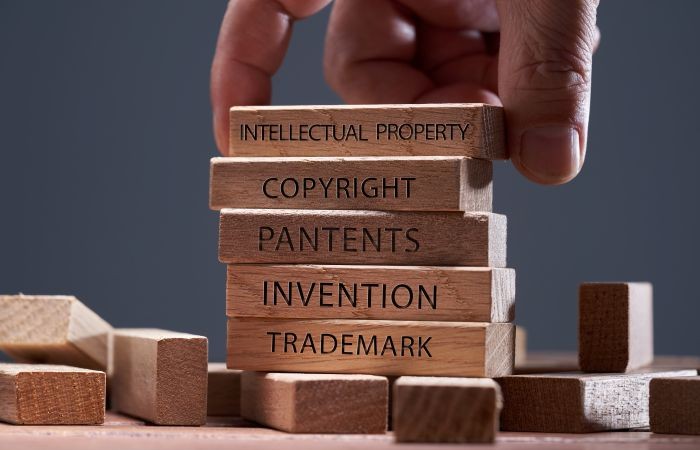
Articles, software, graphics, images: scientific production is also made of creative works. That is why copyright protection is key to ensuring recognition, dissemination and impact.
Intellectual property
The work of those who do research not only contributes to increasing our understanding of the world and the laws that govern it. It also generates a multitude of knowledge and technology who can find applications in everyday life: articles, software, charts, databases, images. All these products are part of a universe that is often not very visible but precious: that of intellectual property.
Within this framework, a key part is represented by the copyright, which protects the most creative component of research work, and which, precisely for this reason, deserves attention and awareness.
When it comes to “intellectual property”, we need to refer to two broad categories:
- The industrial property, which concerns patents, (opens in a new window) trademarks, industrial design (technological innovation in the strict sense);
- The copyright, which protects creative works of ingenuity, such as literature, music and works of art, but also software, scientific articles and databases. Its peculiarity is that it does not require a formal deposit, since the rights arise at the very moment of the creation of the work.
Moral and patrimonial rights
For each copyrighted work there are two types of rights:
- I moral rights, which always belong to the author (unless he explicitly renounces them while he is alive), to whom they guarantee the recognition of the authorship of the work and the possibility of opposing modifications or distorted uses. They are inalienable and without deadline.
- I property rights on the other hand, they concern the economic exploitation of the work: its publication, reproduction, modification and translation. They represent an intangible good that can be sold, licensed, or exchanged, and are limited in time (in Italy they last up to 70 years after the death of the author). An example is the licence to publish a scientific article, through which the author assigns the property rights to a publisher, but retains the authorship of the work.
Copyright and scientific research
In the context of scientific research, it is fundamental strike a balance between two complementary needs: on the one hand, to protect the copyright of those who produce knowledge; on the other hand, to ensure maximum dissemination of results, following the principles of science open, which INFN shares and promotes.
Indeed, scientific work generates numerous works covered by copyright: scientific articles, computer programs e databases but also images, graphics, presentations. All materials that it is important to recognize as such and make accessible in the most effective and responsible way possible.
For a researcher, the publication in magazine peer reviewed (i.e. a “peer review”) is the main channel for raising awareness of the fruits of one’s work and gaining recognition in the scientific community. Precisely for this reason, it is essential that moral copyrights are protected. However, the accessibility of articles is often limited by high subscription costs imposed by scientific journals, Not all institutions can deal with it. This is why it becomes important adopt open access publication models, i.e. in magazines that make articles available free of charge to anyone. In addition to magazines, you can also release your own content on open access repositories, attaching a specific license governing their use.
Among these, the licenses Creative Commons (CC) They are a flexible and internationally recognised solution: they allow the works to be shared free of charge, setting clear conditions on their use, such as the attribution of the author, non-commercial use or the obligation to share under the same licence.
In the case of software or codes developed for scientific research, in addition to the dual need to recognise the author and to ensure the dissemination of knowledge, the possibility of marketing the software to third parties. According to the Copyright Law (Law No 633 of 1941, as amended), the property rights in software developed for and at the expense of a public body, as in the case of codes created as part of INFN’s research activities, belong to the body itself, which can then distribute the software under a specific licence. INFN's policy in this regard is to use an open source license of type copyleft, This means making the source code freely available, while maintaining author recognition and ensuring that redistribution takes place under a compatible licence. INFN has identified EUGPL (European Union Public Licence) as the most appropriate license. It is also possible to provide for a double type of license: open source and free for research use and paid for commercial use.
INFN and copyright
Through the Technology Transfer Service (opens in a new window) and the Working Group on Open Science (opens in a new window), INFN works to create a balance between author recognition, protection of rights and dissemination of knowledge.
A careful and conscious copyright culture is now more necessary than ever for give value to research, promote collaboration and maximising impact of the works born in the laboratories, in the projects and in the minds of those who do science.
News
Read also
More news from INFN Technology Transfer.
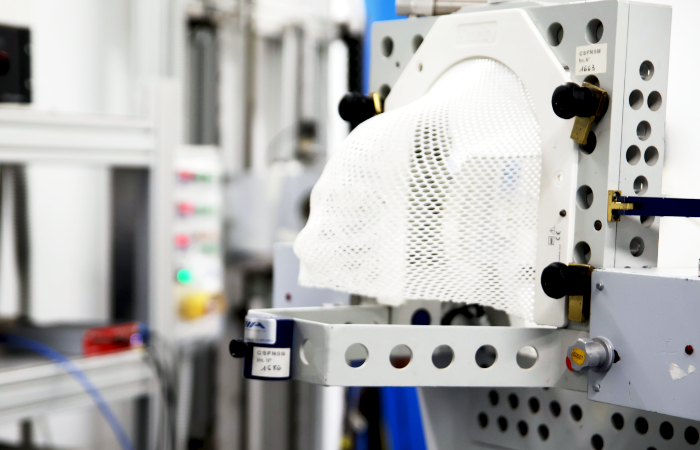
Particle accelerators at the service of society
If you think of a particle accelerator, great equipment comes to mind in laboratories dedicated to scientific research. The role of these machines in the study of basic science is certainly very important, however, they are also used for purposes closer to everyday life. Among the different applications of accelerators, the most significant are probably those related to medicine and cancer treatment.
L as Lead
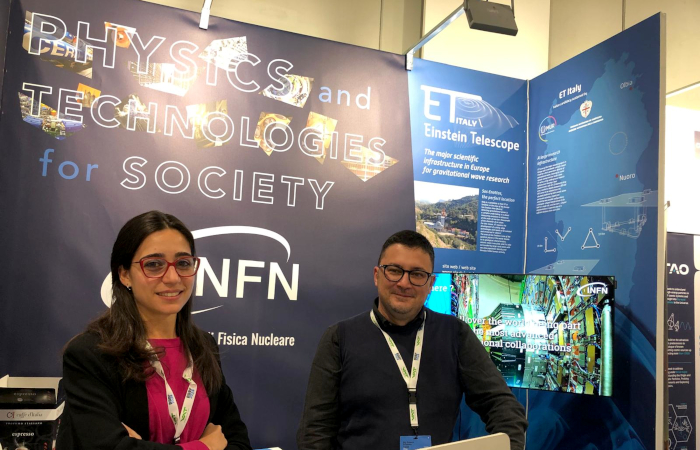
To reach the market, a technology born in the laboratory needs to be accompanied along a path that goes from identifying its application potential to valorisation, through constant monitoring and support. This is the role that the INFN Technology Transfer Service, together with the National Committee for Technology Transfer (CNTT) and the network of local representatives plays every day, that is to act as a lead, a guide, between basic physics and the productive world. Lead is a structured process that connects laboratories, researchers, companies, investors and institutions to transform skills and knowledge into concrete innovation capable of generating value for society.

From Laboratory to Patient: The Role of INFN Technology Transfer in Life Sciences
From laboratory to patient: the role of INFN Technology Transfer in medical physics The point of view of Mariangela Cestelli Guidi, coordinator of INFN's National Committee for Technology Transfer
Contact us
Want to collaborate with INFN?
Tell us about your need: the TT Service puts you in touch with the right people and skills for your project.
Contact us