




Insights
I as Innovation
A good idea alone does not generate innovation. It is the necessary basis, but it is only the beginning of a path that can be very long, leading the idea to leave the laboratory where it was created and spread in society.

A good idea alone does not generate innovation. It is the necessary basis, but it is only the beginning of a path that can be very long, leading the idea to leave the laboratory where it was created and spread in society.
When the idea meets the technique, it produces ainvention (opens in a new window), which can be protected by a patent or protected as know-how. But even the invention, no matter how good, is not enough to create innovation. What is needed is for innovation to enter society. disseminated and at the end assimilated, i.e. effectively used and embedded in a business model that can expand and scale.
The innovation process therefore has three fundamental aspects:
- The generation, where new products, services or processes are designed and developed;
- The dissemination, where discoveries pass to the laboratory at the market;
- Theassimilation, where discoveries are incorporated into scalable business models and act on the society that then benefits from them.
Every technology is not immediately accepted by the majority of people, but its adoption follows a typical curve (Rogers curve) that can be more or less accelerated, but which always maintains the same trend: first it is accepted and used by a small group of people, innovators and first adopters, then by the majority of people, and finally by the laggards, the population groups that by culture or choice are more reluctant to accept the changes that a new technology involves.
The factors influencing the adoption of an innovative product are different, both economic and cultural and social, but the trend can be replicated for every technological innovation, from smartphones to induction cooktops, from wearable devices to artificial intelligence services.
Since its inception, INFN has been engaged in frontier research, where theoretical discoveries and advanced technologies play in synergy to enable the advancement of knowledge, and therefore has enormous potential within it to generation of new ideas and inventions. The Institute is also engaged in dissemination new technologies, however, to ensure that these technologies really enter the market and are assimilated, Collaboration with industry is needed to make new products and services available on the market and accessible in terms of cost and ease of use.
In this regard, the principles ofopen innovation, a widespread innovation process based on the management of knowledge flows into or out of the institution, in which innovation is generated by accessing, exploiting and assimilating knowledge flows that cross the boundaries of the Institute.
In particular, for a research organisation, innovation is mainly open outwards: knowledge is made available to companies that can use it to create products to bring to the market. The flow of knowledge from INFN to the industrial reality must of course be managed, paying particular attention to the protection of the Institute’s intellectual property and reputation. This task is delegated to INFN’s technology transfer facilities, which have several tools at their disposal, such as:
- The licensing (opens in a new window) inventions covered by patents or protected as know-how;
- Support for the creation of spin-off (opens in a new window) INFN;
- The conclusion of agreements of collaborative research (opens in a new window) with companies.
- Measures of financing (opens in a new window) to increase the technological maturity of research products.
In addition to these tools, which are already well-established and widely used, INFN’s technology transfer has recently organised, in collaboration with Cassa Depositi e Prestiti, a training course aimed at providing research staff with knowledge and skills useful for bridging the ‘valley of death’ that often opens up between the results of scientific research and their commercial use.
Innovation is therefore a process that starts with a good idea and continues with its dissemination until society gradually assimilates the new technology and benefits from it. Several actors are involved in this process and cooperate with each other in an open innovation perspective. INFN’s role is to be the engine that generates new inventions and makes them available to the productive reality through the typical tools of technology transfer.
News
Read also
More news from INFN Technology Transfer.
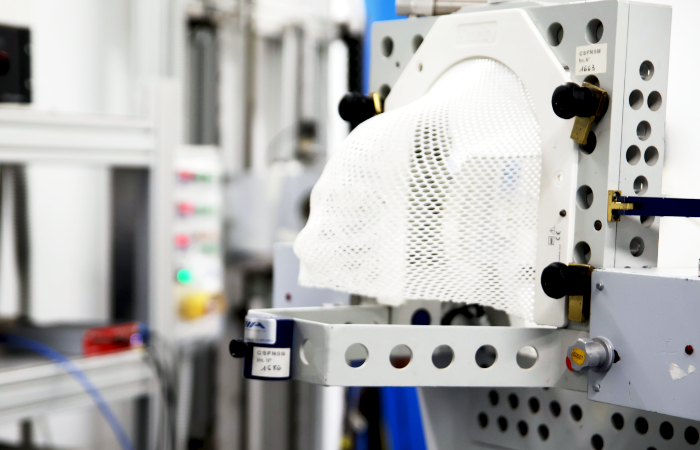
Particle accelerators at the service of society
If you think of a particle accelerator, great equipment comes to mind in laboratories dedicated to scientific research. The role of these machines in the study of basic science is certainly very important, however, they are also used for purposes closer to everyday life. Among the different applications of accelerators, the most significant are probably those related to medicine and cancer treatment.
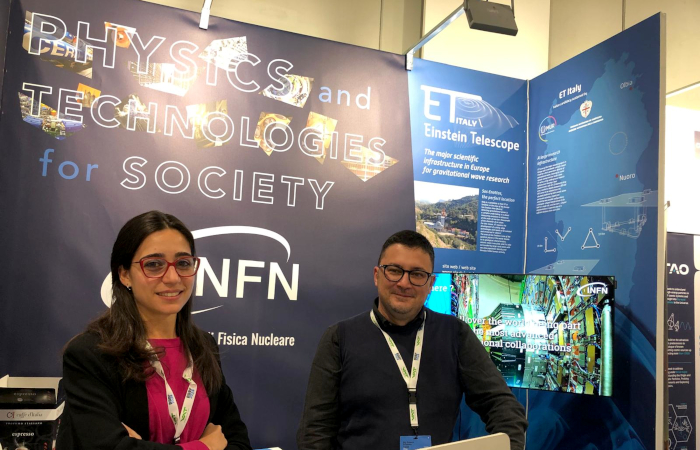
L as Lead
To reach the market, a technology born in the laboratory needs to be accompanied along a path that goes from identifying its application potential to valorisation, through constant monitoring and support. This is the role that the INFN Technology Transfer Service, together with the National Committee for Technology Transfer (CNTT) and the network of local representatives plays every day, that is to act as a lead, a guide, between basic physics and the productive world. Lead is a structured process that connects laboratories, researchers, companies, investors and institutions to transform skills and knowledge into concrete innovation capable of generating value for society.

From Laboratory to Patient: The Role of INFN Technology Transfer in Life Sciences
From laboratory to patient: the role of INFN Technology Transfer in medical physics The point of view of Mariangela Cestelli Guidi, coordinator of INFN's National Committee for Technology Transfer
Contact us
Want to collaborate with INFN?
Tell us about your need: the TT Service puts you in touch with the right people and skills for your project.
Contact us